
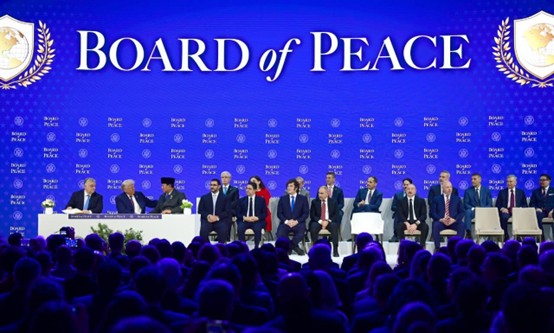
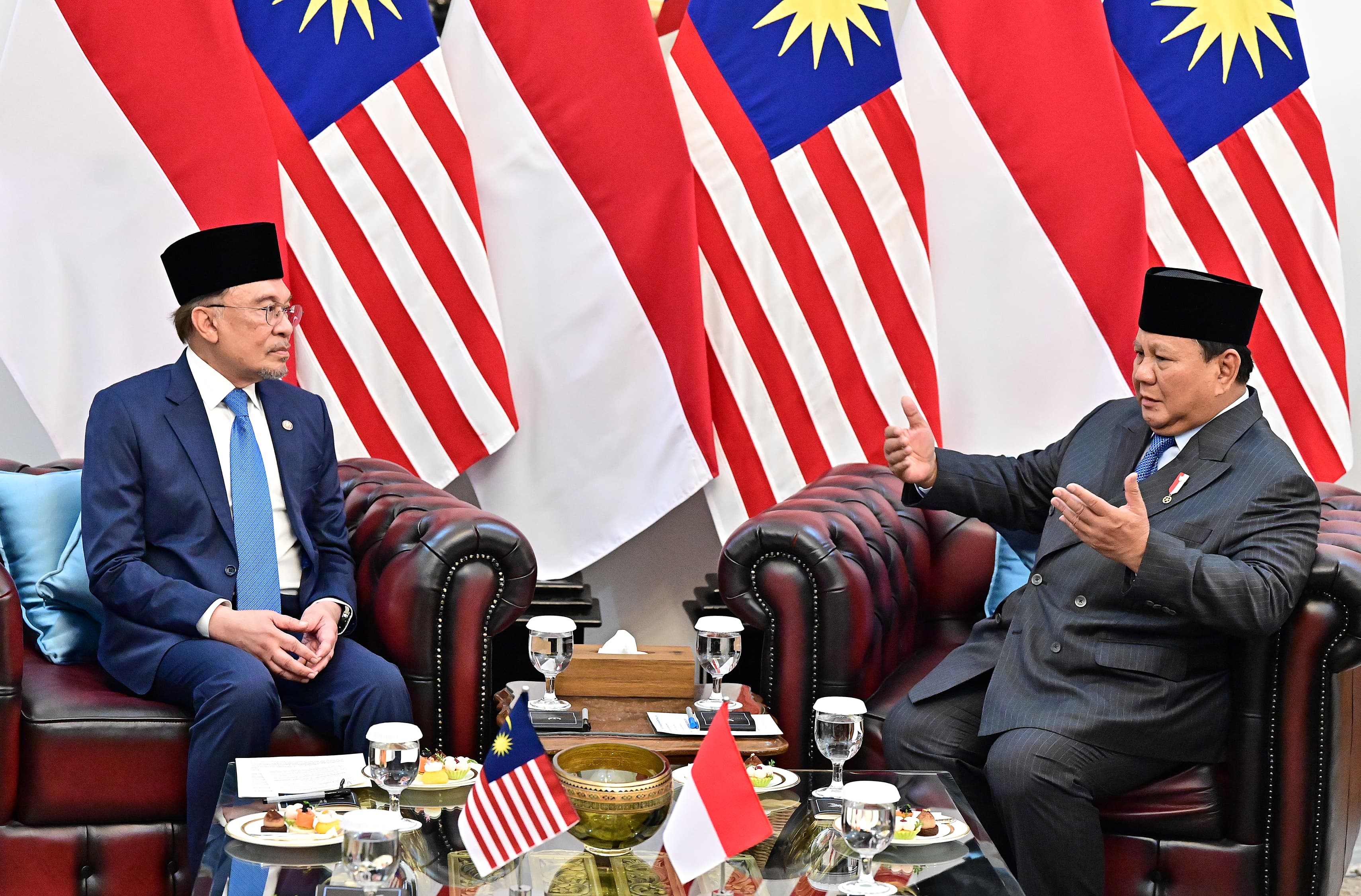
Image credit: Kementerian Sekretariat Negara, Republik Indonesia (Ministry of State Secretariat, Republic of Indonesia) via Setneg.
When President Prabowo signed the Board of Peace Charter in Davos on 22 January 2026, the gesture did not simply add another bullet point to Indonesia’s diplomatic itinerary. It placed Jakarta inside a larger debate that is quietly reshaping contemporary international politics: what “peace” is taken to mean, who is authorized to deliver it, and by what institutional form. In the context of Gaza, peace is increasingly presented not primarily as a political settlement to be built through representation, recognition, and legitimacy, but as a managed transition, a sequence of coordination tasks involving stabilization, humanitarian access, reconstruction, and administrative control. For decades, at least at the level of diplomatic form, peace was tied to multilateral procedure: prolonged bargaining, imperfect compromises, and mechanisms that often seemed slow or frustrating, but were still treated as necessary precisely because they created a basis for broader acceptance.
Today, a subtle yet decisive shift is emerging. Peace is being reframed as a governance problem, one that requires a coordination hub, streamlined decision chains, measurable targets, and operational benchmarks. The Board of Peace appears within this logic as a compact format that promises order and effectiveness. Many audiences find that promise attractive. The international system is widely perceived as stuck: too many actors, too many veto players, too many procedural layers. Under such conditions, a small, fast-moving mechanism looks like an answer, one that can, at least in its narrative, align security priorities, reconstruction planning, humanitarian access, and post-conflict administration.
The implied message is simple: enough ambiguity; now it is time to run the transition. Yet precisely when peace is compressed into the language of coordination, an old question returns, no matter how much some try to suppress it: who governs the transition? Managing a transition is never neutral. It means deciding who is recognized as a legitimate interlocutor and who is excluded; who controls access to aid, logistics, and security, and who becomes dependent; and who gets to define what counts as stability and what counts as threat. These are not technical details. They are political decisions that shape the trajectory of the transition itself.
A new hierarchy of transition governance
This is why the Board of Peace matters as a symptom of a broader development: the emergence of a new hierarchy of authority in post-conflict governance. Authority is increasingly built not through wide consent, but through a claim of operational effectiveness. The format is streamlined and concentrated: fewer actors, shorter decision chains, faster coordination. Embedded within it is an assumption that is rarely stated openly yet often does the real work: legitimacy will follow once order is installed. This assumption is not new. Externally guided transitions have repeatedly promised that stability first will make politics possible later. But history offers a stubborn warning: legitimacy rarely arrives automatically. It must be constructed through processes that streamlined mechanisms often compress or postpone, mediation, representation, social bargaining, and the slow production of acceptance.
Even the language used to describe these arrangements often reveals the underlying logic. A board suggests corporate governance rather than political representation. It evokes oversight, management, accountability, targets, deliverables. These concepts are not inherently negative. Post-conflict environments do require administrative competence. But the question is whether administrative competence becomes a bridge to political legitimacy, or a substitute for it. Post-conflict transitions undeniably demand concrete capacities: reopening schools, rebuilding hospitals, restoring electricity and water, ensuring salaries and basic services, regulating humanitarian flows, securing infrastructure, and re-establishing routine governance.
In such contexts, the figure of the professional administrator becomes seductive: rational, efficient, seemingly detached from factional interests. Yet in environments like Gaza, what appears administrative rarely remains merely administrative. Access is power. Security is power. Reconstruction is power. Decisions about what gets rebuilt first, who supplies and supervises projects, who controls crossings and logistics, and who polices public order inevitably reconfigure social and political hierarchies on the ground. Administration does not remove politics; it relocates it, often into less visible arenas where accountability becomes harder.
This relocation matters because it changes the terrain on which political contestation occurs. When authority is exercised through managerial mechanisms, contracts, oversight bodies, security coordination, conditionality frameworks, political conflict does not disappear. Instead, it can become more diffuse and more volatile. Political actors struggle not only over seats and votes but over channels of access, distribution networks, and the ability to claim that their communities are being systematically marginalized. The core risk is familiar from many externally guided transitions: a governance arrangement may deliver a form of administrative stability without producing a durable political settlement. In such situations, temporary structures often become semi-permanent. Benchmarks and timelines multiply, but the moment of political ownership keeps receding. Meanwhile, resentment accumulates, precisely because the experience of being governed is not accompanied by the experience of representation.
Indonesia’s entry: between normative identity and strategic positioning
From this perspective, it becomes easier to interpret the hesitation voiced by some Western partners. The doubts expressed in Europe are not necessarily a rejection of stabilization as a goal; they are anxieties about the institutional form and the precedents it might set. States that are sensitive to legal and political precedents will ask: if this model is installed for Gaza today, does it become the template for future crises tomorrow? Once a mechanism centralizes authority, questions about mandate limits, accountability, and durability become unavoidable. That is why the debate is not only about an endpoint peace but about the architecture of authority that defines the path toward it. In multilateral systems, procedure is not a bureaucratic fetish; it is part of how legitimacy is produced. When new formats shorten procedure in the name of speed, they also risk shortening the channels through which consent can be built.
The politics of transition governance is therefore also a politics of legitimacy production. Against this backdrop, Indonesia’s decision to join the Board of Peace is revealing because it captures a dilemma experienced by many Global South states but rarely articulated candidly: the tension between normative identity and strategic positioning. On one side, Indonesia has long cultivated a strong moral and political capital around the Palestinian cause. This is not a marginal issue. It is embedded in diplomatic history, identity narratives, and domestic public sensibilities. Palestinian solidarity has been framed as an ethical commitment and a marker of Indonesia’s international posture.
On the other side, Indonesia operates in an international order increasingly shaped by restricted formats, coalitions of the willing, ad hoc groups, and small committees where decisions are made quickly by a limited set of actors. In such a system, being excluded from decision-making spaces can mean losing influence precisely when the material conditions of the day after are set: who controls access points, who manages reconstruction funds, who sets security priorities, and what political pathways are deemed acceptable. This is the central paradox of contemporary diplomacy for middle powers: if the table exists, refusing to sit at it does not necessarily prevent decisions from being made. It may simply ensure that one has less ability to shape them. For Jakarta, joining can be interpreted as a strategy of presence: if decisions will proceed with or without Indonesia, it may be preferable to be inside the room, trying to moderate the hardest edges of the arrangement, pushing for a more sustainable route, and maintaining Indonesia’s official commitment to a two-state solution. Such a strategy does not automatically imply full alignment. Participation can be tactical rather than ideological. But it still carries costs.
March 2026 developments have already exposed how contingent this strategy of presence really is. On 4 March, Foreign Minister Sugiono stated that discussions on the Board of Peace were “on hold” as Jakarta’s attention shifted to the wider regional war triggered by the U.S.-Israeli strikes on Iran, and two days later Prabowo publicly declared that Indonesia would withdraw if the initiative no longer benefited Palestinians or aligned with Indonesian national interests. At the same time, plans related to Indonesia’s prospective troop contribution to the Gaza stabilization force were also thrown into uncertainty, with regional escalation affecting the timing and viability of deployment and subsequent Indonesian reporting indicating that the deployment itself had been put on hold. These developments do not negate Indonesia’s initial decision to enter the room. They reveal, rather, that Jakarta’s participation was never politically settled: it was a conditional and reversible strategy of engagement, exposed from the outset to domestic reputational pressure, regional volatility, and the persistent risk that presence might be read not as influence, but as complicity. The costs are partly reputational and partly domestic-political.
The domestic price: presence, reputation, and legitimacy
The costs are partly reputational and partly domestic-political. A governance format widely perceived as driven by Washington can be interpreted at home as an excessive compromise, or as the normalization of external control over a Palestinian future. Domestic audiences do not only evaluate outcomes; they evaluate the perceived coherence between national identity claims and international behavior. This is where foreign policy meets domestic politics in a particularly sensitive way. Participation in an external transition framework often produces internal contestation, accusations of inconsistency, debates about sovereignty and independence, suspicion about who benefits from the arrangement, and arguments over whether the government is prioritizing access and influence at the expense of principle. In other words, external governance mechanisms can generate internal polarization.
The day after in Gaza is not only a problem for Gaza; it becomes a problem for states that attach their credibility to the Palestinian question. For a government seeking diplomatic stature and international relevance, participation is attractive. For a public that expects moral clarity, participation may look like ambiguity. The challenge for Indonesia is that its standing on the Palestinian issue is not simply rhetorical. It is a component of its soft power, a foundation of its international moral identity, and a key axis of domestic legitimacy. If participation is interpreted as endorsing a transition architecture that sidelines political representation, Indonesia could suffer a reputational backlash that undermines its ability to claim moral leadership. Ultimately, the decisive question is not only whether the Board of Peace can speed up reconstruction. It is whether it can transform management into a bridge toward political authority that is recognized as legitimate. Transitions tend to succeed when temporary arrangements genuinely lead toward representation and recognition. They tend to fail when temporary arrangements become permanent substitutes for politics.
The boundary between these outcomes is often thin. It depends less on how sophisticated the plans are and more on how authority is experienced and contested on the ground. If local communities perceive transition governance as an external administrative regime, even competent delivery of services may not prevent political rejection. If security arrangements are experienced as control rather than protection, stabilization can become the prelude to renewed contestation. This is also why time matters. Managerial frameworks often love timelines and benchmarks. But legitimacy does not follow a spreadsheet. It is produced through lived experience: whether communities feel seen, represented, and protected; whether political pathways remain open; whether coercion is restrained; and whether administration is perceived as serving a future political settlement rather than postponing it indefinitely.
Why Indonesia’s presence must be more than symbolic ?
If Indonesia is to justify its choice to join, its presence must translate into clear principles and concrete demands. At minimum, three commitments are essential. First, civilian protection and humanitarian access must be treated as non-negotiable, not as variables conditional on political bargaining. Indonesia’s credibility depends on whether it is seen as defending human security rather than merely participating in institutional choreography. Second, transparency in reconstruction governance matters. Reconstruction is not only a humanitarian project; it is also an economic and political arena. Without transparent mechanisms, reconstruction can become a system of patronage, dependency, and inequality, fuel for future instability. Third, a political pathway toward representation cannot be postponed indefinitely. If managerial governance becomes the main story while political representation remains perpetually later, the transition risks becoming an open-ended administrative regime. Indonesia can claim a distinctive role if it insists that political ownership is not optional, it is the condition for durable stability.
To understand Jakarta’s decision, it is therefore necessary to look beyond the rhetoric of peace. Not because rhetoric is irrelevant, but because peace in world politics is always also a struggle over who decides, who controls access, and who bears the costs. Indonesia enters this architecture with its own history and domestic pressures. The United States advances it with a belief that order can be installed from a control center. Parts of Europe view it anxiously because they fear the precedent it may establish. This is how international transitions usually unfold: not as a linear march toward stability, but as a tug-of-war between effectiveness and legitimacy, presence and reputation, management and politics. Within that tension, not within any slogan, the fate of the day after will be decided. And precisely because Indonesia has chosen to be present, Jakarta must ensure that presence does not end at participation. It must be converted into a principled stance that pushes the transition away from indefinite administration and toward political legitimacy. Otherwise, even the most polished management framework can produce only a brittle administrative calm, and Indonesia, rather than acting as a balancing voice, may end up lending legitimacy to an outcome it does not control.

Aniello Iannone is a Lecturer in International Political Economy at President University, Indonesia. He holds a PhD in International Relations and International Political Economy from Universitas Airlangga. His research examines Southeast Asian political economy, Indonesian domestic politics and foreign policy, ASEAN regionalism, and Taiwan-Indonesia relations. A central focus is transnational labour exploitation, migrant worker governance, and platform labour dynamics. He has developed the concept of "lordly capitalism" to analyse Indonesia's oligarchic political economy, where modernization coexists with personalized domination and quasi-feudal labour relations, and has written on ASEAN's "paralyzed regionalism" for the Lowy Institute. His work combines critical approaches to international political economy with empirically grounded analysis of how structures of power reshape institutions, labour regimes, and regional orders.
In "Structural Aseanisation," Aniello Ianone explores Europe's strategic shift in...
In this article, Aniello Iannone critically evaluates the ten-year trajectory...
The global order is moving beyond rigid bloc politics toward...
In this article, Luo Chen Jun highlights a striking historical...
In this article, Muhamad Ferdy Firmansyah highlights how climate technology...
In his latest article, Aniello Iannone examines the gap between...
This article analyzes Indonesia's ambitious military modernization through its strategic...
DeepRare is being hailed as a major breakthrough in the...
This article analyzes President Prabowo’s decision to skip the June...
This article analyzes the phenomenon of "sibling rivalry" at the...
This article evaluates the normative frameworks offered by China’s four...
This article examines the 2025 Thailand–Cambodia border conflict to evaluate...
This article examines the May 2026 ASEAN Summit in Cebu...
This article examines the May 2026 Beijing summit between Xi...
This article examines how the rise of narcissistic foreign policy—exemplified...
In October 2025, Indonesia's President Prabowo Subianto announced that Portuguese...
This article argues that recent U.S.–Israel military actions against Iran...
This article examines Türkiye’s evolving "Third Way" in Africa, an...
This article critically examines Indonesia’s evolving role from a quiet...
This article provides a firsthand account of how Pakistan emerged...
This article examines how disruptions in the Strait of Hormuz...
This article examines Indonesia’s participation in the Board of Peace...
This article examines what the attempted sale of CK Hutchison's...
This article examines the Kudankulam Nuclear Power Plant as a...




Leave A Comment