

When the United Nations Security Council failed to refer the Syrian conflict to the International Criminal Court (ICC) in 2014, blocked by the joint veto of Russia and China, it revealed a devastating flaw in the global justice system. The world was watching as chemical weapons were used against civilians, entire cities like Aleppo and Homs reduced to rubble, and millions displaced across borders. Yet the institutions built to defend humanity stood still. The veto, meant to protect international stability, had become a tool of paralysis.
I argue that the Security Council’s unchecked veto power has become a structural barrier to justice and a direct threat to the legitimacy of global governance. The Syrian case is not an isolated failure but a vivid demonstration of how international law collapses when confronted with geopolitical interests. By allowing permanent members to protect themselves and their allies from accountability, the veto system undermines the principles of equality and responsibility that the United Nations was founded upon.
At the heart of this crisis lies a contradiction: justice claims to be universal, yet its application reflects the hierarchies of global power. For instance, we can observe that since its establishment in 2002, the International Criminal Court (ICC) has conducted investigations in 33 countries, but every completed trial has involved individuals from weaker or less influential states, primarily in Africa (Arnould, 2017). No senior official from a major power has ever been prosecuted. This record reinforces the perception that international justice is selective since it prosecutes the powerless while protecting the powerful.
The Syrian conflict shows this imbalance. Despite overwhelming evidence of war crimes and crimes against humanity, including the deliberate targeting of hospitals and civilians, the Security Council was unable to act. In May 2014, a resolution that would have referred Syria to the ICC received support from 13 of 15 Council members. Yet Russia and China cast their vetoes, blocking the measure and ensuring impunity for all parties involved. Moscow claimed that Western countries were politicizing justice, while Beijing cited concerns about national sovereignty. The result was obvious: no accountability, no deterrence, and it proved the supported culture of impunity. The implications of that veto sent a chilling message to victims of atrocities worldwide: justice depends on your allies and geographical locations.
While Article 13 (b) of the Rome Statute of the International Criminal Court is designed to expand the ICC’s jurisdiction to situations that would otherwise fall outside its scope, the veto power held by the permanent members (P-5) of the Security Council effectively restricts this potential from the inception. The Permanent Members’ ability to block referrals renders the jurisdictional reach of Article 13 (b) selectively enforceable, introducing a paradox of authority whereby a provision meant to guarantee justice can be undermined by political interests (Schuerch, 2017). This undoubtedly shows that the Security Council can act decisively on some conflicts but remains silent on others where its members have strategic interests.
This phenomenon, where justice is applied selectively, is not just a moral failure; it is an existential threat to the legitimacy of multilateral institutions. The global rule of law becomes a matter of convenience; It is seen that many in the Global South now view institutions like the UN and ICC not as neutral guardians of justice, but as extensions of great-power politics. That perception, whether fully accurate or not, undermines compliance, cooperation, and trust in the international system.
To address this crisis, reform is essential.
There must be some limitations on the use of the veto in cases involving mass atrocities, genocide, or war crimes. A coalition of states should request an advisory opinion from the International Court of Justice on the legality of using the veto to block action on mass atrocities, particularly considering peremptory norms of international law such as the prohibition of genocide and crimes against humanity. The question could be framed around whether such use of the veto violates the object and purpose of the United Nations Charter, or whether it conflicts with peremptory norms of international law. An International Court of Justice’s opinion, while not binding, would carry significant legal and moral authority and could provide a basis for further reform and accountability. This approach offers a legal pathway to challenge the legitimacy of veto abuse while respecting the current structure of international law.
The Assembly of States Parties to the Rome Statute should also propose and adopt an amendment that should be established through a United Nations General Assembly resolution, calling upon the five permanent members (P-5) of the Security Council to commit to a voluntary but binding code of conduct often referred to as the Responsibility Not to Veto. Under this proposed recommendation, Permanent members would agree not to use their veto once convincing evidence of mass atrocities is presented by independent United Nations bodies, such as the UN Secretary-General or the High Commissioner for Human Rights.
The United Nations Security Council was created to defend peace. Today, it too often stands by as peace is destroyed. The unchecked use of the veto by a few powerful nations has eroded its legitimacy and moral authority. Reforming the veto by limiting its use in cases of mass atrocity, requiring public justification, and empowering the General Assembly remains essential to building a more just and effective global order.

Gilbert NAYIGIZENTE is a Rwandan legal and public policy professional with a strong commitment to governance, leadership, and sustainable development. He holds a Bachelor’s degree in Law from the University of Rwanda, where he developed a solid foundation in legal reasoning, public administration, and institutional analysis. Building on this background, he is currently pursuing a Master in Public Administration (MPA) at the Lee Kuan Yew School of Public Policy (LKYSPP), National University of Singapore, one of Asia’s leading institutions for public policy and global governance.
In this article, Aniello Iannone critically evaluates the ten-year trajectory...
The global order is moving beyond rigid bloc politics toward...
In this article, Luo Chen Jun highlights a striking historical...
In this article, Muhamad Ferdy Firmansyah highlights how climate technology...
In his latest article, Aniello Iannone examines the gap between...
This article analyzes Indonesia's ambitious military modernization through its strategic...
DeepRare is being hailed as a major breakthrough in the...
This article analyzes President Prabowo’s decision to skip the June...
This article analyzes the phenomenon of "sibling rivalry" at the...
This article evaluates the normative frameworks offered by China’s four...
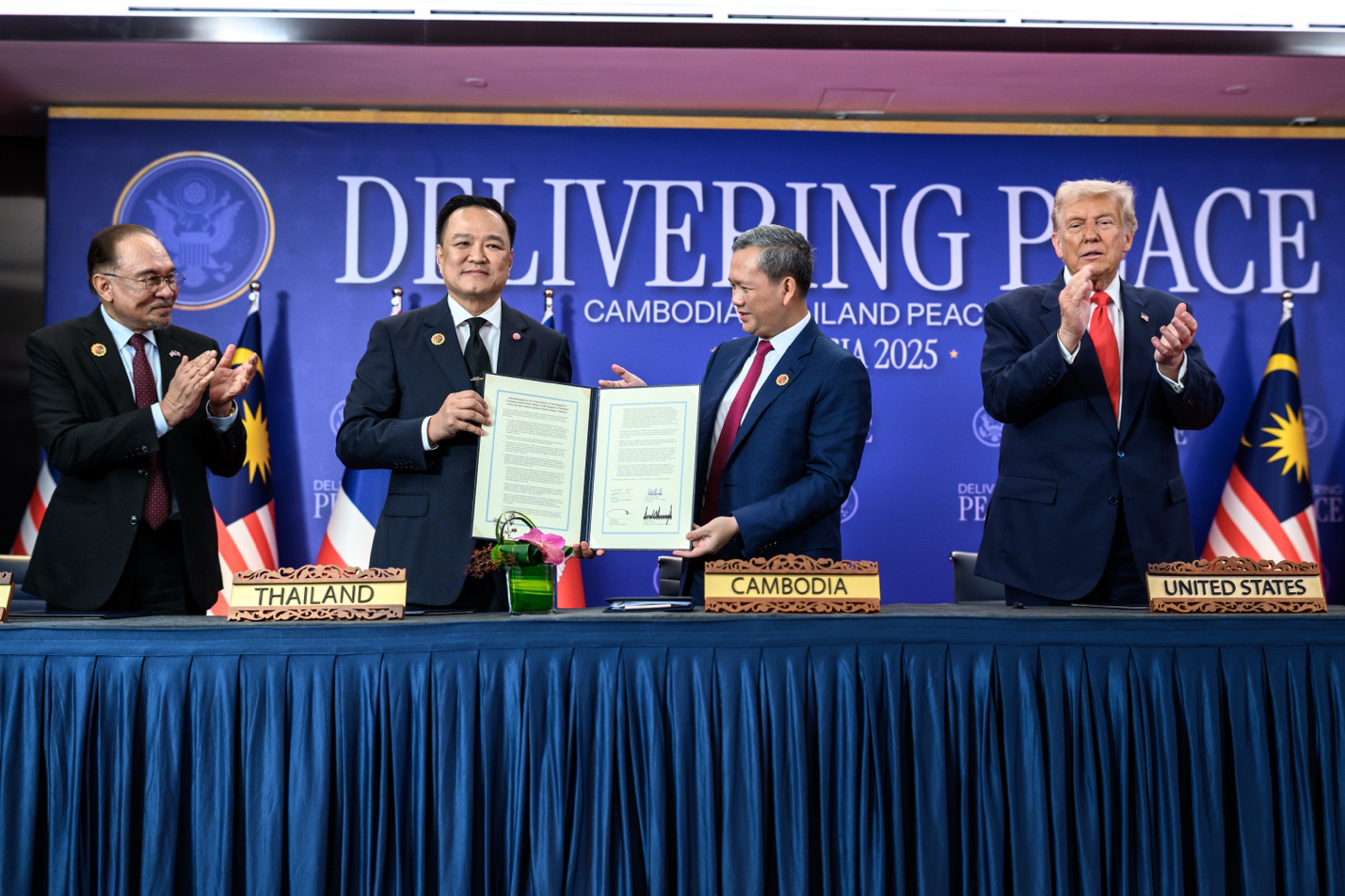
This article examines the 2025 Thailand–Cambodia border conflict to evaluate...
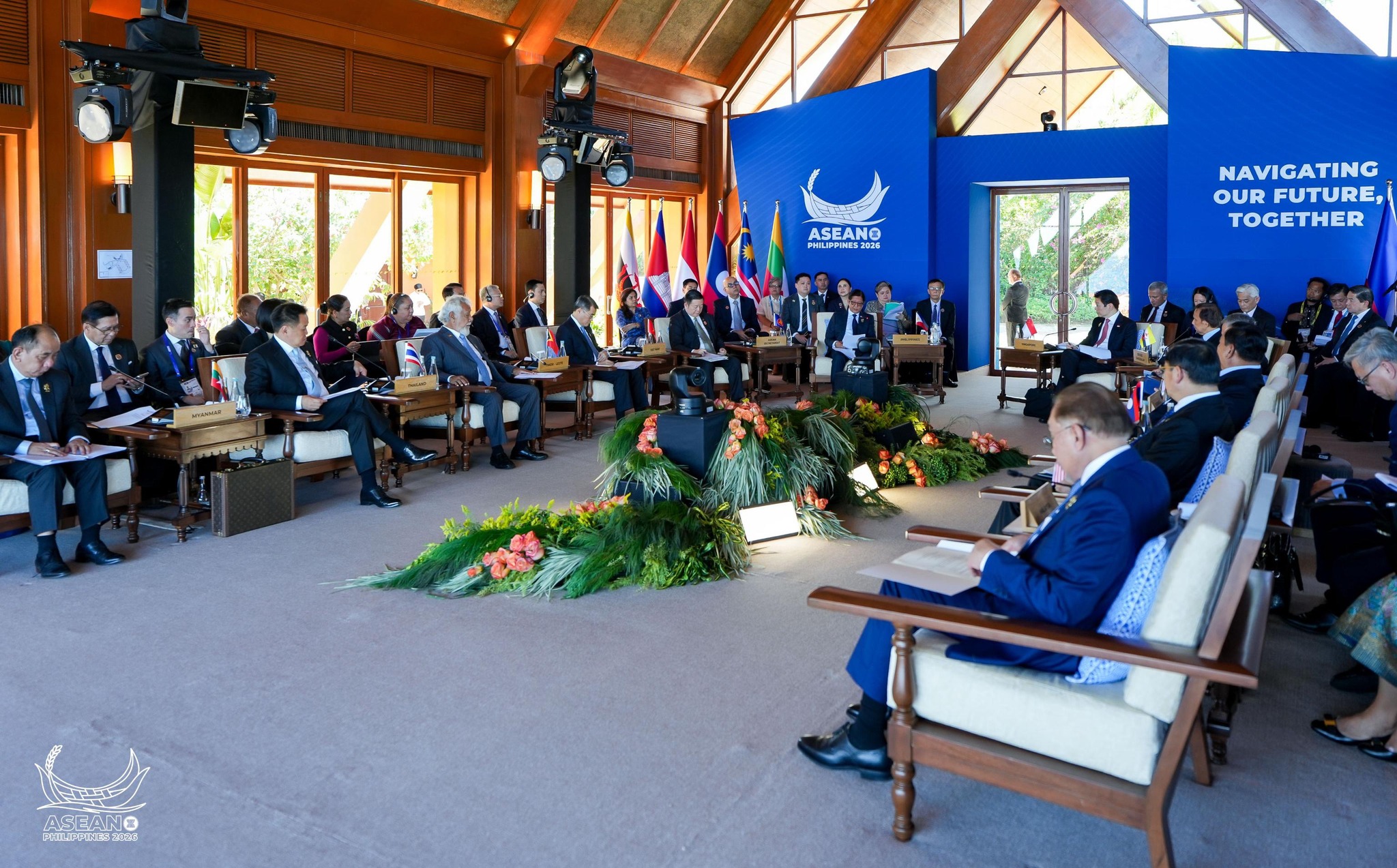
This article examines the May 2026 ASEAN Summit in Cebu...
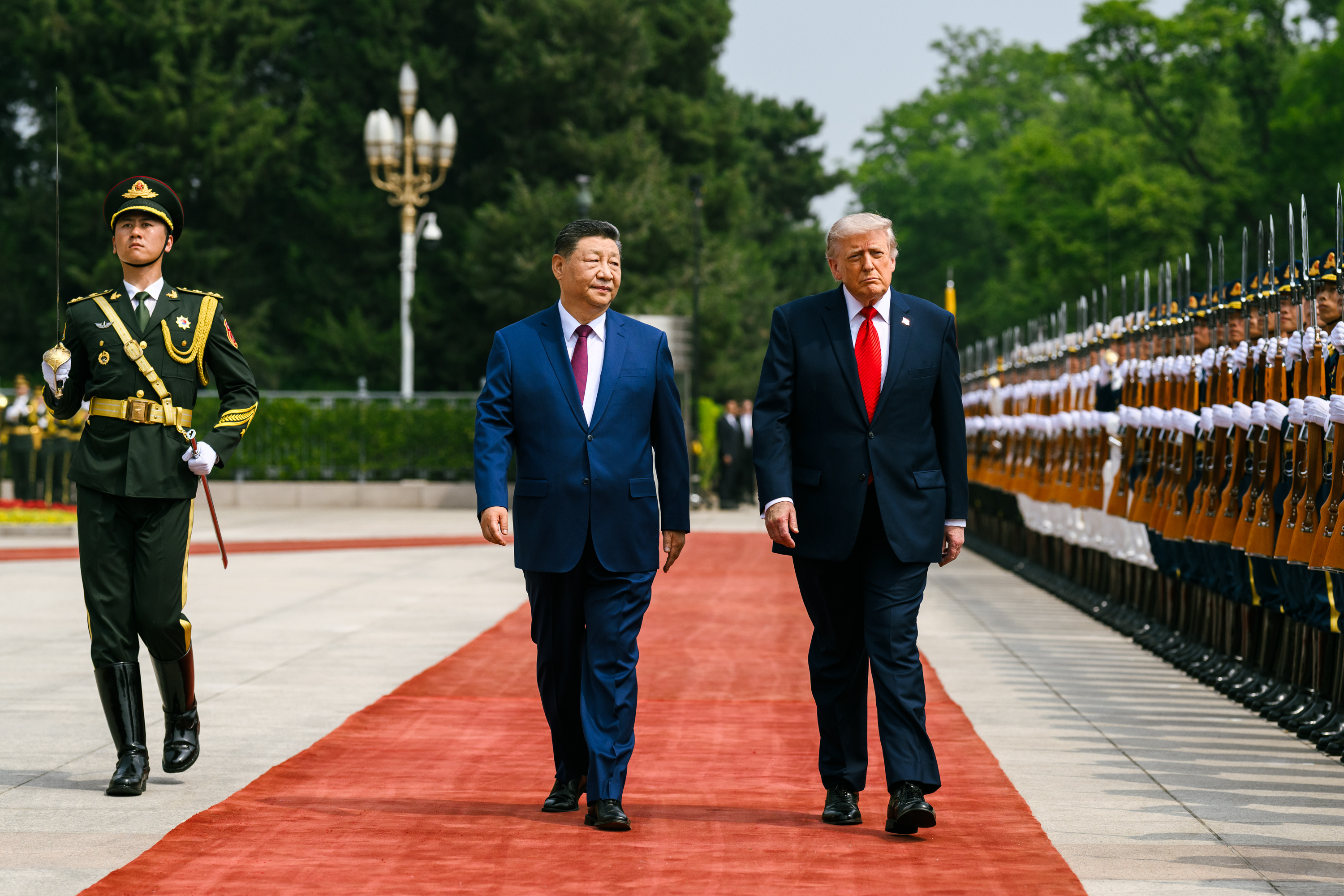
This article examines the May 2026 Beijing summit between Xi...
This article examines how the rise of narcissistic foreign policy—exemplified...
In October 2025, Indonesia's President Prabowo Subianto announced that Portuguese...
This article argues that recent U.S.–Israel military actions against Iran...
This article examines Türkiye’s evolving "Third Way" in Africa, an...
This article critically examines Indonesia’s evolving role from a quiet...
This article provides a firsthand account of how Pakistan emerged...
This article examines how disruptions in the Strait of Hormuz...
This article examines Indonesia’s participation in the Board of Peace...
This article examines what the attempted sale of CK Hutchison's...
This article examines the Kudankulam Nuclear Power Plant as a...
This article examines Nepal’s strategic position within the Indo-Pacific and...






Leave A Comment