

Russia has agreed to extend the International Space Station’s operation until 2028. Amid sharp diplomatic disagreements Russia and the US continue to cooperate in space exploration. Earlier in August this year, astronauts from the US, Japan, Russia joined NASA’s Crew-11 mission to the International Space Station (ISS) wherein they will carry out a variety of scientific experiments and technology demonstrations.
The concept of science diplomacy has increasingly gained currency in both peace time and settings of conflict resolution as there is any barely any geopolitical development not affected by the output of research and innovation. A report published in Nature early this year, raised concerns about democratization of science amid geopolitical uncertainties stating ‘can science be deployed in diplomacy — for example, to resolve disagreements on global challenges?’. Here the bigger question to be asked is, can political systems collectively invest in developing scientific infrastructure based on shared interests irrespective of diplomatic disagreements?
Science Diplomacy Amid Global Uncertainties
Science Diplomacy opens possibilities for nations to compete on innovation while cooperating on shared infrastructure privy to a sustainable global economy. Given that power is widely dispersed with leading scientific nations across the globe, the evolving domain of diplomacy is yet to offer in-depth solutions to polar digital divides irrespective of its advantage of neutral adaptation to systems and cultures. However drawing inspiration from initiatives like CERN during cold war or Synchrotron-Light for Experimental Science and Applications in the Middle East (SESAME) Geneva Science and Diplomacy Anticipator (GESDA) currently can broaden the horizon of scientific collaboration ignoring geopolitical complexities.
In view of an era of transactional global trade and foreign policy, Cole Donovan, Associate Director for Science and Technology Ecosystem Development at the Federation of American Scientists (FAS), in a report penned in July this year criticised US inattention to the nuts and bolts of science and technology diplomacy convincing some of the country’s closest partners of the need to reduce their reliance on the US.
An inward looking science and technology policy approach in the long term will increasingly push smaller countries to collaborate and work on big projects. During an event jointly hosted by Russian House and Nepal-Russia Science Society in Kathmandu on 'Nepal-Russia Scientific and Technical Relations: Building Trust and Collaboration through Science Diplomacy' emphasized the importance of promoting science diplomacy to strengthen ties between scientists from Nepal and Russia. This comes weeks after Nepal raised questions about recruitment of Nepalese nationals in the Russian army.
Italy, which formally exited the Belt and Road Initiative in December 2023 citing a lack of expected economic benefits and aligning with EU policy, have signed a wide range of cooperation agreements during China - Italy Science, Technology, and Innovation Week in Beijing in November 2025 aimed at revitalizing ‘science diplomacy’ capable of offering sustainable solutions to global issues.
Science Diplomacy in Global South
India, a firm believer in democratisation of science and technology has grown from being a participant to a leader in global scientific cooperation initiatives based on mutual respect and equality. India’s active role in International Solar Alliance and Vaccine Diplomacy is an example of its commitment to lead by example in the domain of science diplomacy. The Coalition for Disaster Resilient Infrastructure (CDRI), is another significant step initiated by India for fostering international collaboration on resilient infrastructure, blending science and diplomacy.
In 2017, India launched the South Asia Satellite (officially GSAT-9), a geostationary communication satellite intended for civil applications to serve the SAARC region. Global South actors in Africa, Latin America, Asia, and parts of Oceania recognize the importance of science diplomacy in fostering South-South partnerships. Challenging the parochial western dominance on scientific discipline, Global South is now actively working to ensure its perspectives are included in the scientific and diplomatic governance of Antarctica. India hosted the 46th Antarctic Treaty Consultative Meeting and the 26th Committee for Environmental Protection in India in 2024. Slowly and steadily Inter Governmental Organizations in the Global South like African Space Agency (ASA), Latin American and Caribbean Space Agency (ALCE),TWAS (Third World Academy of Sciences) are increasing their pace and participation in science diplomacy. Brazil and South Africa have leveraged their status as “megadiverse” countries to lead in biodiversity diplomacy , while smaller nations like Uganda focus on health equity.
Global Integration a Possibility?
In principle, UNESCO’s pronounced commitment to science diplomacy as a driver of peace, sustainability, and international cooperation promises to open doors for countries across the spectrum to leverage diplomatic cooperation on scientific prowess and knowledge. Early this year, UNESCO Regional Bureau for Science and Culture in Europe had put emphasis on exploring how knowledge-sharing and cross-border collaboration can safeguard the future of water. Further, Global initiatives like Human Cell Atlas Initiative endorsed by UNESCO to map human cell types in a comprehensive reference atlas to revolutionize disease diagnosis, monitoring, and treatment can pave the way for a more integrated approach in the domain of science and diplomacy.
Science Diplomacy as an advanced application model is also advantageous in defence and security. For example, Biological and Toxin Weapons Convention (BWC) is positioned at the interface of defence diplomacy and science diplomacy, rooted in arms control that simultaneously relies on scientific cooperation. Building a methodical mechanism would require most relevant approaches entwined with science diplomacy that can practically strengthen the Convention. In an advanced move of demonstrative scientific collaboration in defence and security between the UN and ETH Zurich, researchers from the Center of Security Studies (CSS) and Interactive Visualization & Intelligence Augmentation Lab (IVIA) at ETH Zurich are working with the United Nations (UN) to develop a deep-learning model to predict short-term conflict events using techniques adapted from computer vision to support UN peacekeeping missions.
Assuming that science diplomacy will help build bridges at its own pace beyond ‘transactional’ foreign policy pursuits in coming times, an international mechanism to enable scientific research outputs reach policy makers will be a challenging task.

Dr. Angana Guha Roy is currently working as an Associate Director at the Asian Institute of Diplomacy and International Affairs, Kathmandu. She writes on Foreign Policy, Geopolitics, Defence and National Security, and other prominent issues in International Relations. Please contact her at : anganaguharoy@gmail.com
In this article, Aniello Iannone critically evaluates the ten-year trajectory...
The global order is moving beyond rigid bloc politics toward...
In this article, Luo Chen Jun highlights a striking historical...
In this article, Muhamad Ferdy Firmansyah highlights how climate technology...
In his latest article, Aniello Iannone examines the gap between...
This article analyzes Indonesia's ambitious military modernization through its strategic...
DeepRare is being hailed as a major breakthrough in the...
This article analyzes President Prabowo’s decision to skip the June...
This article analyzes the phenomenon of "sibling rivalry" at the...
This article evaluates the normative frameworks offered by China’s four...
This article examines the 2025 Thailand–Cambodia border conflict to evaluate...
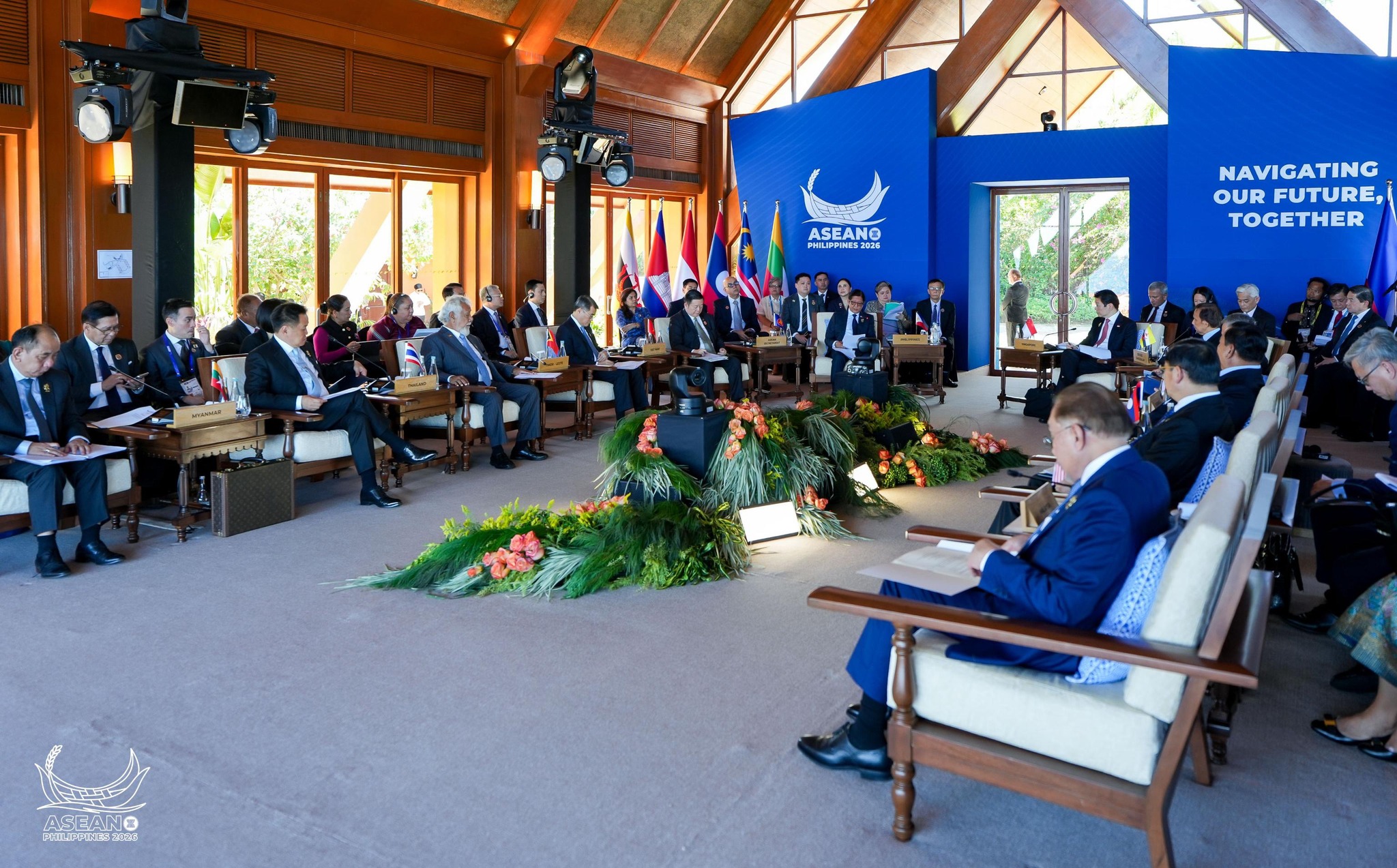
This article examines the May 2026 ASEAN Summit in Cebu...
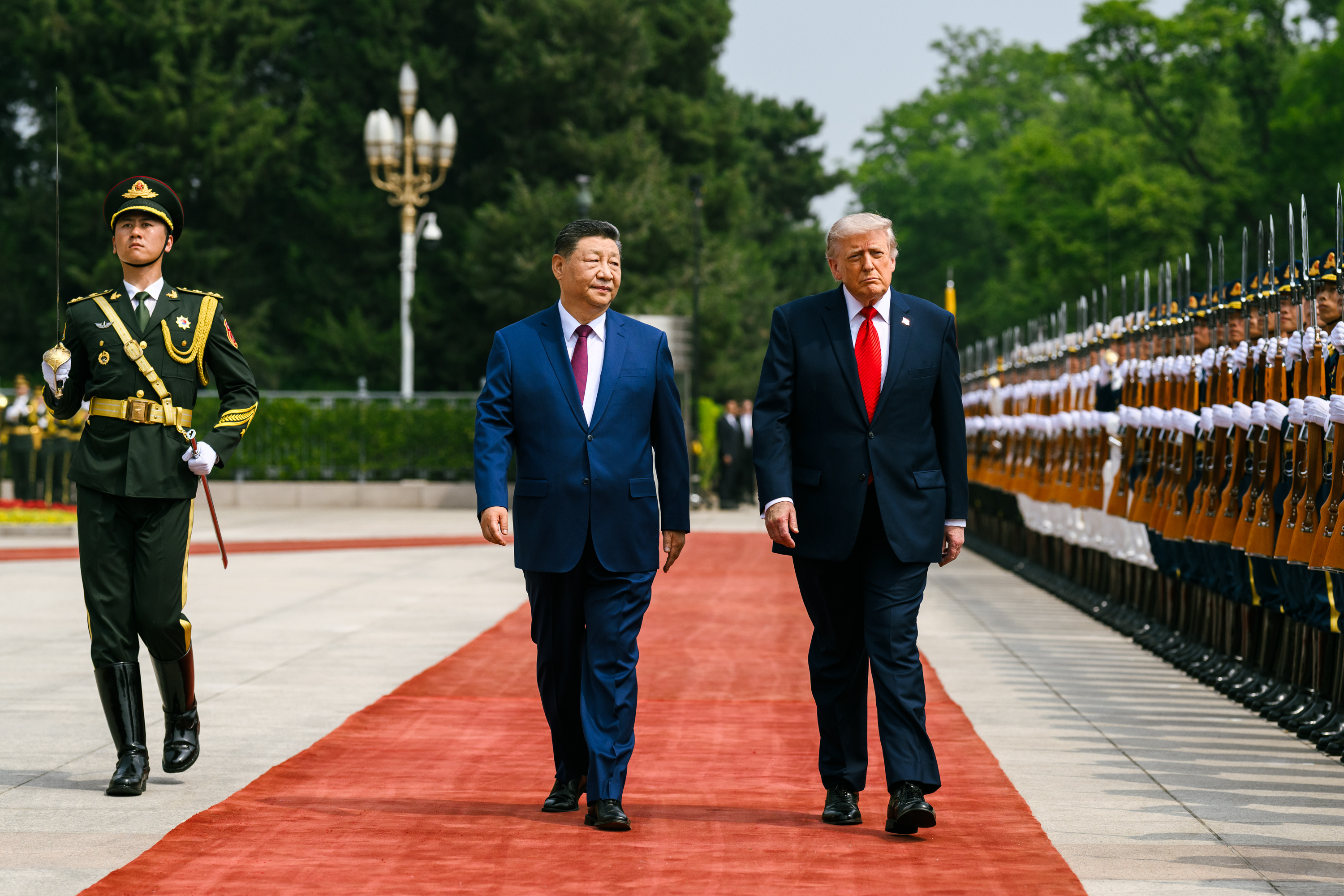
This article examines the May 2026 Beijing summit between Xi...
This article examines how the rise of narcissistic foreign policy—exemplified...
In October 2025, Indonesia's President Prabowo Subianto announced that Portuguese...
This article argues that recent U.S.–Israel military actions against Iran...
This article examines Türkiye’s evolving "Third Way" in Africa, an...
This article critically examines Indonesia’s evolving role from a quiet...
This article provides a firsthand account of how Pakistan emerged...
This article examines how disruptions in the Strait of Hormuz...
This article examines Indonesia’s participation in the Board of Peace...
This article examines what the attempted sale of CK Hutchison's...
This article examines the Kudankulam Nuclear Power Plant as a...
This article examines Nepal’s strategic position within the Indo-Pacific and...






Leave A Comment