

In September 2025 President Donald Trump shared (later deleted) an AI-generated deepfake video on his Truth Social account promoting ‘MedBeds’, a longstanding conspiracy theory that claims that advanced, futuristic medical technology capable of curing all diseases being secretly hidden from the public by governments and militaries. The deepfake video falsely claimed a new healthcare system was launching with "medbed hospitals" and "medbed cards" for every citizen. In a separate incident in a show of deep political divide, following the ‘Med Bed’ deepfake video incident, President Trump shared deepfake video of his opponents from the US Democratic Party.
Deepfakes, which relies on artificial intelligence (AI) and machine learning, pose systemic challenges to threaten the entire information environment. A number of political figures have been targeted by deepfakes in recent years, especially drawing attention to its misuse during the election cycles in 2024 and 2025 across the world. According to available data and statistics deployment of deepfakes is growing at an alarming rate. Deepfake files surged from 500,000 in 2023 to a projected 8 million in 2025. Reports reveal, malicious deepfake content is frequently used to promote false statements, false statements, electioneering, character assassination, and non-consensual pornography.
Tactical use of deepfake operations for political warfare is becoming a common trend now. Seemingly unaware about its ill impact even mainstream popular political parties in big democracies like India have time and again used deepfake video for casual political campaigns.
In the recent past, technology facilitated gender-based violence has mushroomed owing to deepfake. Relevant incidents were reported in India, Pakistan, South Korea, Australia, and the US. In a much publicised incident this year, Chinese authorities launched a criminal investigation following an AI generated porn scandal in Hong Kong University.
Applied Deepfake in Security Hotspots
The security hotspots are emerging as a testing ground for deepfake interference in domestic as well as international politics.
The Philippines has one of the highest rates of social media usage globally. Artificial intelligence (AI)-generated deepfakes and widespread misinformation heavily influenced the May 12, 2025, midterm elections in the Philippines. In the run up to the election there was rampant circulation of deepfake videos. Previously in 2016, the Philippines earned the label “patient zero” in the global disinformation epidemic due to rampant false narratives.
Misinformation and deepfakes during the 2024 Lok Sabha elections in India amplifying deceptive content, trends that have continued into 2025. While less sophisticated "cheapfakes" were more widespread to create falsified content featuring prominent politicians. During the lead-up to the Bihar Assembly elections in November 2025, a fabricated AI video was circulated of Modi's late mother criticizing his politics.
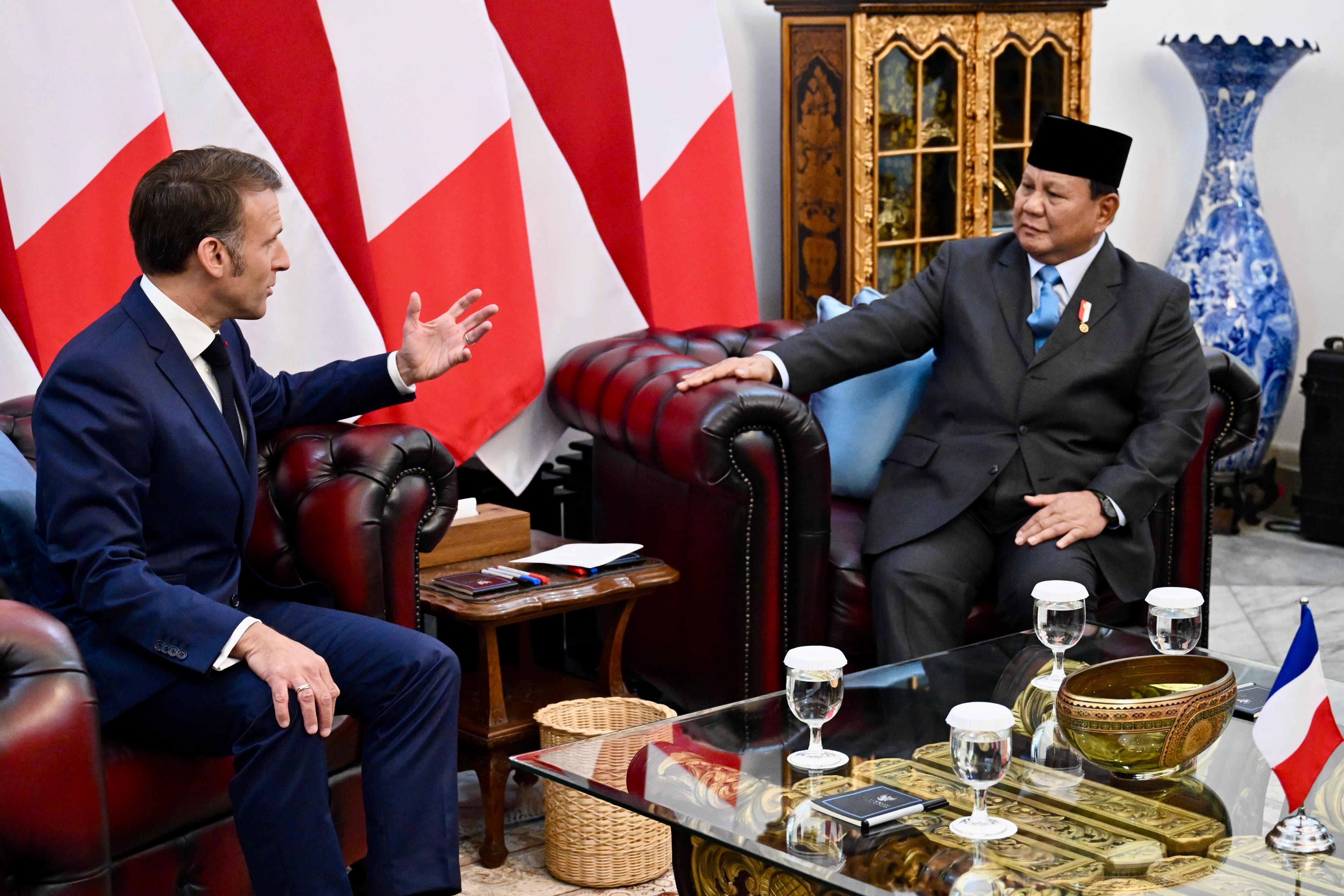
During the 2024 election in Indonesia almost all candidate pairs, including Prabowo Subianto, Gibran Rakabuming Raka, Anies Baswedan, Muhaimin Iskandar, and Ganjar Pranowo, and Mahfud MD, were victims of deepfake disinformation attacks on social media. Disinformation campaigns, which were prevalent during the election, have extended into the post-election period. The Indonesian Anti-Slander Society (Mafindo) reported that the number of hoaxes doubled in 2024 compared to the 2019 election.
Despite fears, deepfakes didn't catastrophically disrupt elections as predicted, but their micro-targeted ads are insidious and threaten instilling long-term cynicism in political landscapes.
During India’s precision strikes against Pakistan’s terror infrastructure in May 2025, social media was flooded by AI-generated deepfakes, disinformation, and repurposed footages including 2020 Beirut port explosion, the 2021 Israel’s Iron Dome interception videos, or even Turkish military rescue mission photographs from 2016.
Reports about Chinese influence operations in the Taiwan Strait continuing to utilize AI-generated deepfakes and manipulated content to sow discord and undermine Taiwan's government has been shared widely. A report from the Fact Link group found that many of AI-generated clips, shared following the January 2024 elections in Taiwan, contained watermarks indicating they were created using Chinese AI tools. However, it could not be definitively proven that the influence campaign was conducted by China. In May 2025, the Global Taiwan Institute reported on the continued malicious use of deepfake technology. This included politically motivated videos aimed at discrediting public figures and compromising privacy, tactics that followed similar deepfake scandals during the 2024 election.
The South China Sea dispute has been subjected to increasingly sophisticated propaganda driven by artificial intelligence (AI). In 2024 and 2025, several incidents involving deepfakes were reported, primarily targeting the Philippines and aimed at undermining its government and alliances. In July 2024, a deepfake video falsely depicting Philippine President Ferdinand Marcos Jr ordering an attack on China went viral. The AI-generated audio closely mimicked Marcos’ voice, causing panic.
The transnational character of the threat risks involvement of actors and facilitators beyond the geographical gamut of incidents outside structured surveillance systems.
Countering the Digital Curtains
Countries have started investing in building ‘trust infrastructure’ to ensure technology ecosystems that are secure and verifiable, limiting the risk of hybrid warfare, and reducing risks from adversarial influences. Drawing lessons from conflicts like the Russo-Ukrainian war, where AI-generated deepfakes have been used to manipulate narratives has pushed security stakeholders like NATO and other existing security groups to adopt AI based solutions to tackle AI based cyberthreats applying ‘ Fighting Fire with Fire’ tactic.
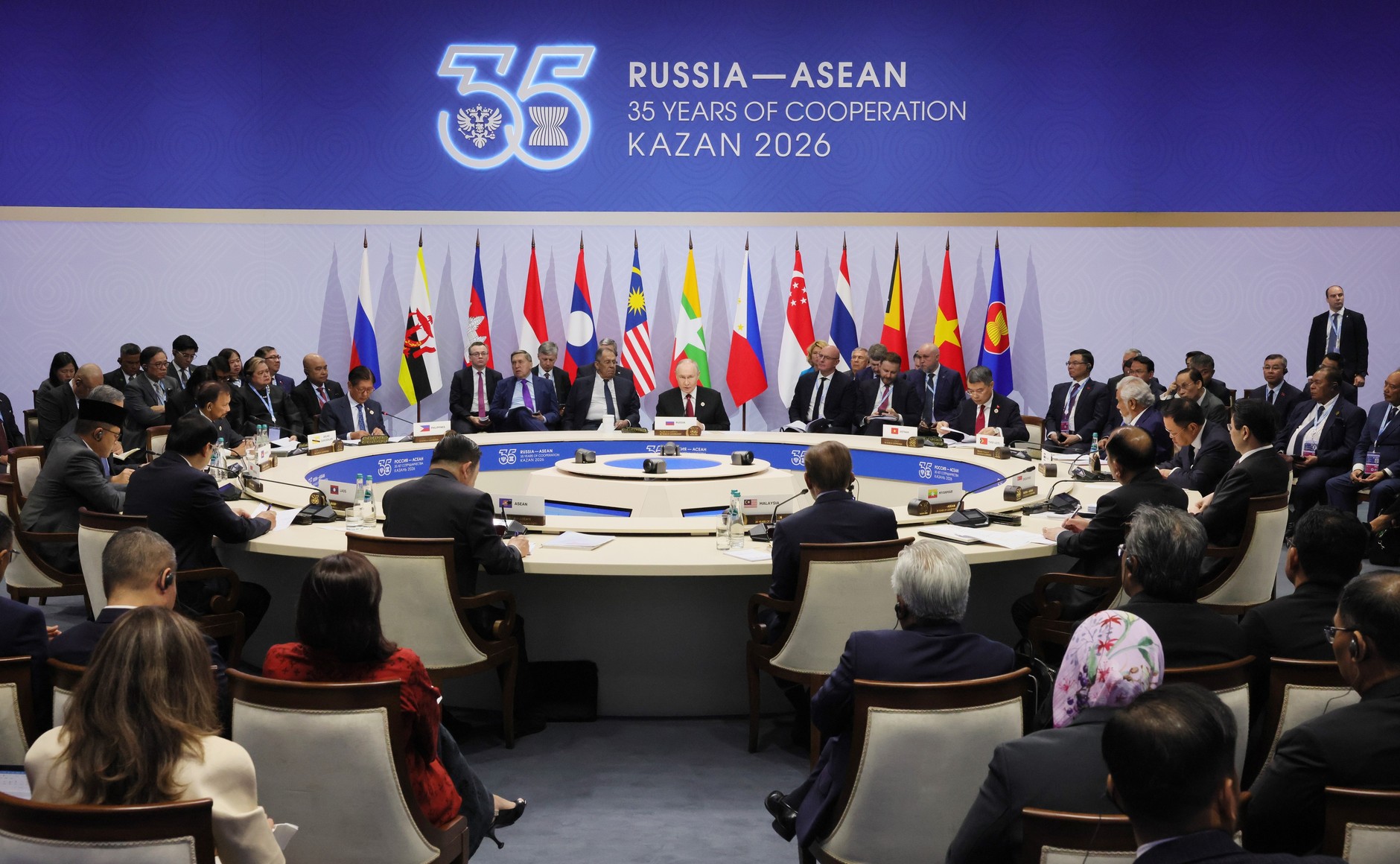
Regional frameworks, such as ASEAN's AI ethics guides are paving way for incorporating AI based threats in the realm of security architecture. Analysts suggest plurilateral groupings like Quad should recognise shared information space as cognitive infrastructure, a critical asset that requires collective security effort . However, existing challenges like enforcement gaps owing to regulatory bottlenecks, and cross-border issues need to be addressed for such broader and collective initiatives.
Major stakeholder countries in Asia Pacific like China, Australia, India, Japan, South Korea, are already working on adopting preventive legal measures. In Southeast Asia, one of the largest victims of deepfake incidents, countries like Indonesia and Singapore lead the way when it comes to legislation-based countermeasures challenging deepfakes. Other countries like Malaysia, Philippines, Laos, Cambodia, Brunei, Vietnam are catching up with the emerging hybrid crisis by drafting strategy documents, and regulatory guidelines. Countries like Laos and Timor Leste are yet to come out with AI dedicated strategies.
Deepfakes risks intensifying information wars leveraging human biases in politics and national security. Any form of collective ‘trust’ infrastructure building must navigate and address the common challenges of the harmful impacts the technology bears (and threatens to bring-forth in modern warfare), as a part of larger AI information warfare. The world has witnessed the potential and harmful impact already in Ukraine- Russia, Israel- Hamas, India- Pakistan conflict. The risks necessitate multi stakeholder solutions (both private and public) based on values and principles of democratic code of conduct.

Dr. Angana Guha Roy is currently working as an Associate Director at the Asian Institute of Diplomacy and International Affairs, Kathmandu. She writes on Foreign Policy, Geopolitics, Defence and National Security, and other prominent issues in International Relations. Please contact her at : anganaguharoy@gmail.com
In this article, Aniello Iannone critically evaluates the ten-year trajectory...
The global order is moving beyond rigid bloc politics toward...
In this article, Luo Chen Jun highlights a striking historical...
In this article, Muhamad Ferdy Firmansyah highlights how climate technology...
In his latest article, Aniello Iannone examines the gap between...
This article analyzes Indonesia's ambitious military modernization through its strategic...
DeepRare is being hailed as a major breakthrough in the...
This article analyzes President Prabowo’s decision to skip the June...
This article analyzes the phenomenon of "sibling rivalry" at the...
This article evaluates the normative frameworks offered by China’s four...
This article examines the 2025 Thailand–Cambodia border conflict to evaluate...
This article examines the May 2026 ASEAN Summit in Cebu...
This article examines the May 2026 Beijing summit between Xi...
This article examines how the rise of narcissistic foreign policy—exemplified...
In October 2025, Indonesia's President Prabowo Subianto announced that Portuguese...
This article argues that recent U.S.–Israel military actions against Iran...
This article examines Türkiye’s evolving "Third Way" in Africa, an...
This article critically examines Indonesia’s evolving role from a quiet...
This article provides a firsthand account of how Pakistan emerged...
This article examines how disruptions in the Strait of Hormuz...
This article examines Indonesia’s participation in the Board of Peace...
This article examines what the attempted sale of CK Hutchison's...
This article examines the Kudankulam Nuclear Power Plant as a...
This article examines Nepal’s strategic position within the Indo-Pacific and...




Leave A Comment