
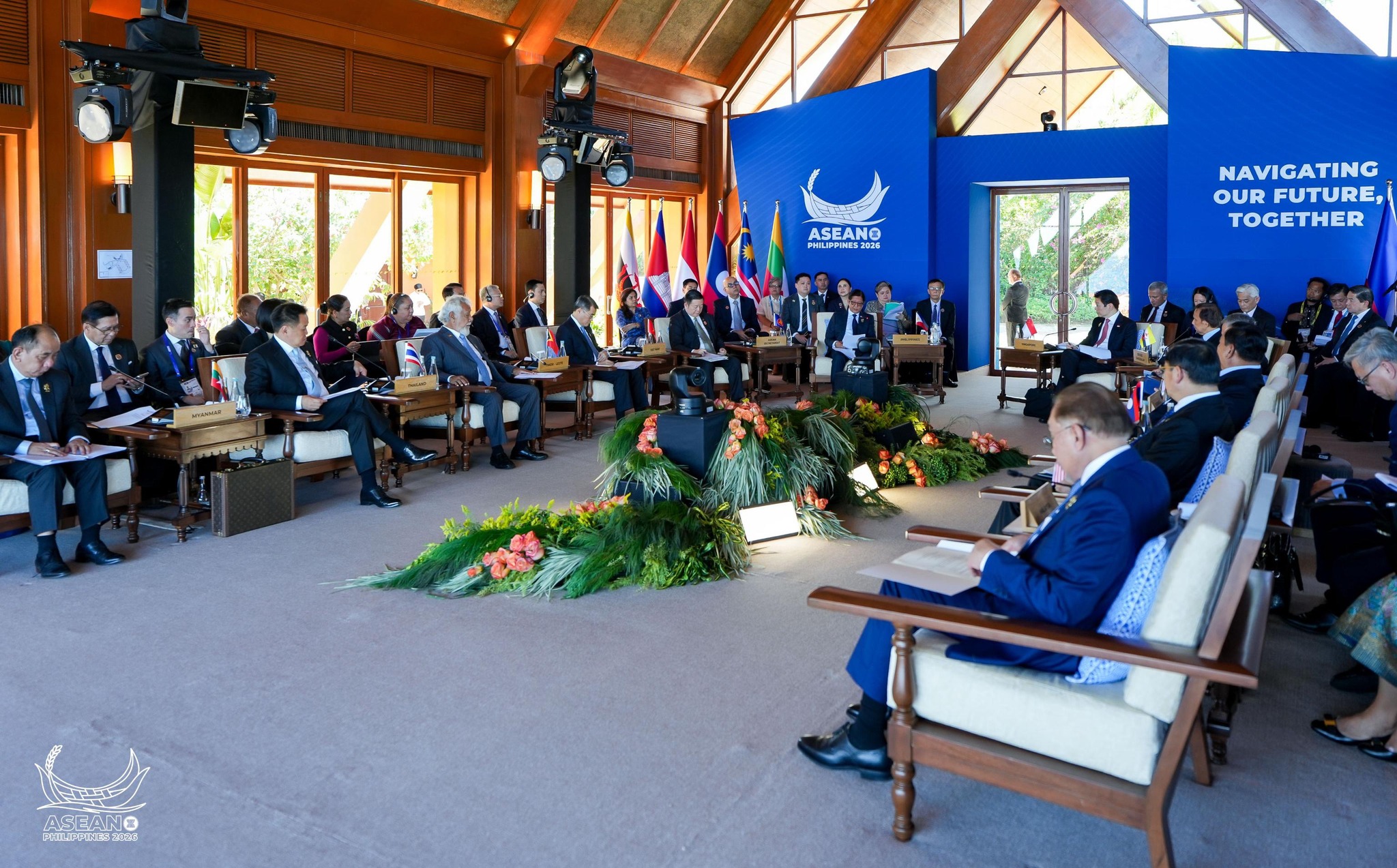
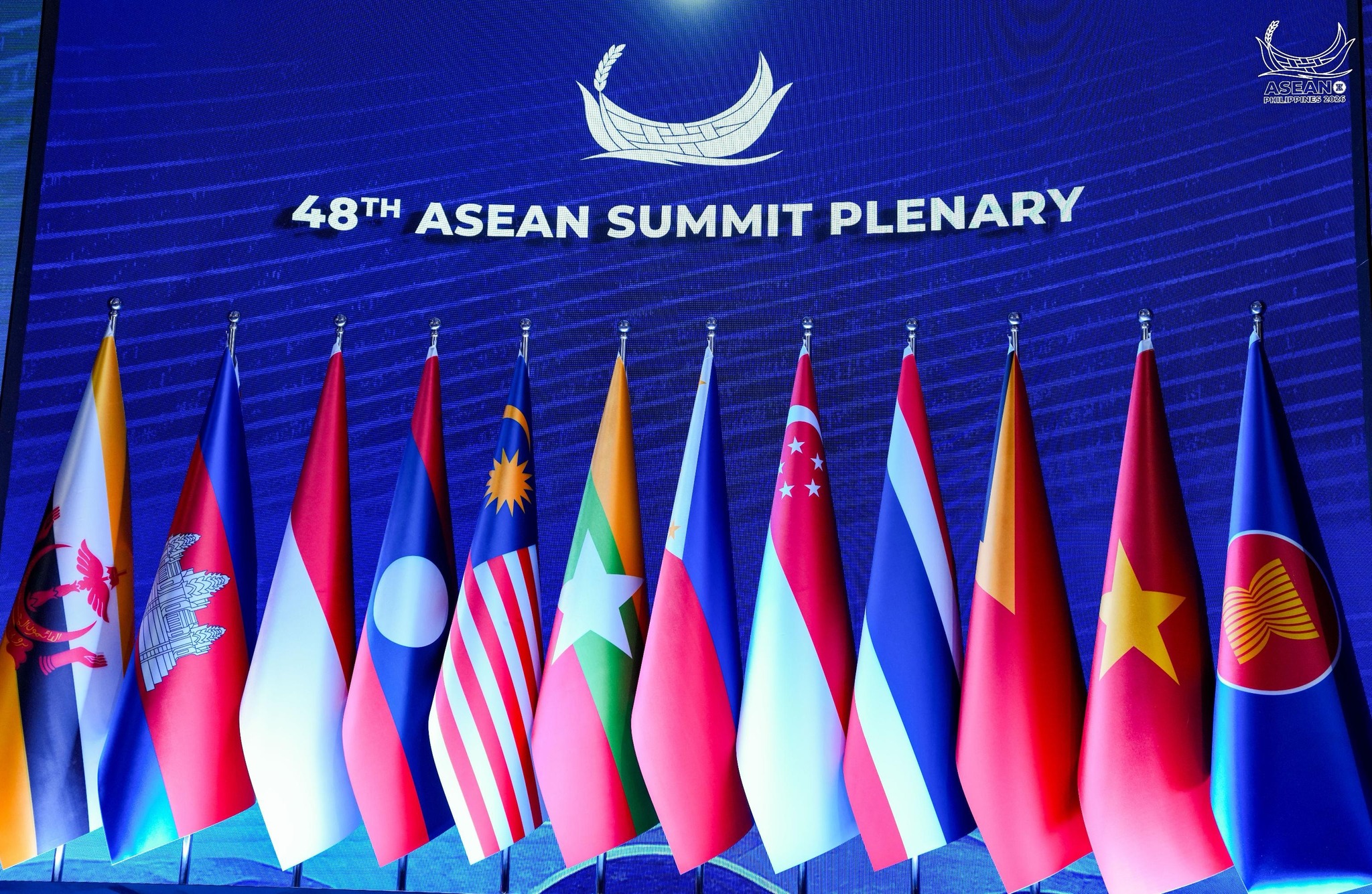
Image Credit: Philippine President Ferdinand R. Marcos Jr. opens the 48th ASEAN Summit Retreat at Mactan Expo, Cebu, 9 May 2026. Image: Presidential Communications Office of the Philippines, via Wikimedia Commons. Public domain.
I watched and took notes on the explanation of Susilo Bambang Yudhoyono, President of the Republic of Indonesia for the 2004-2009 and 2009-2014 periods, broadcast on the Endgame podcast hosted by Gita Wirjawan, author of the book What It Takes: Southeast Asia. Yudhoyono reviewed global politics in detail and systematically, and highlighted the decline of the global agenda due to structural changes in the world, the rise of ultranationalism, the threat of a third world war, the paradigm shift between morality and realism, and Indonesia's participation in the US-initiated Board of Peace (BoP), as the UN's role as a peacemaker in the increasingly volatile global situation weakened.
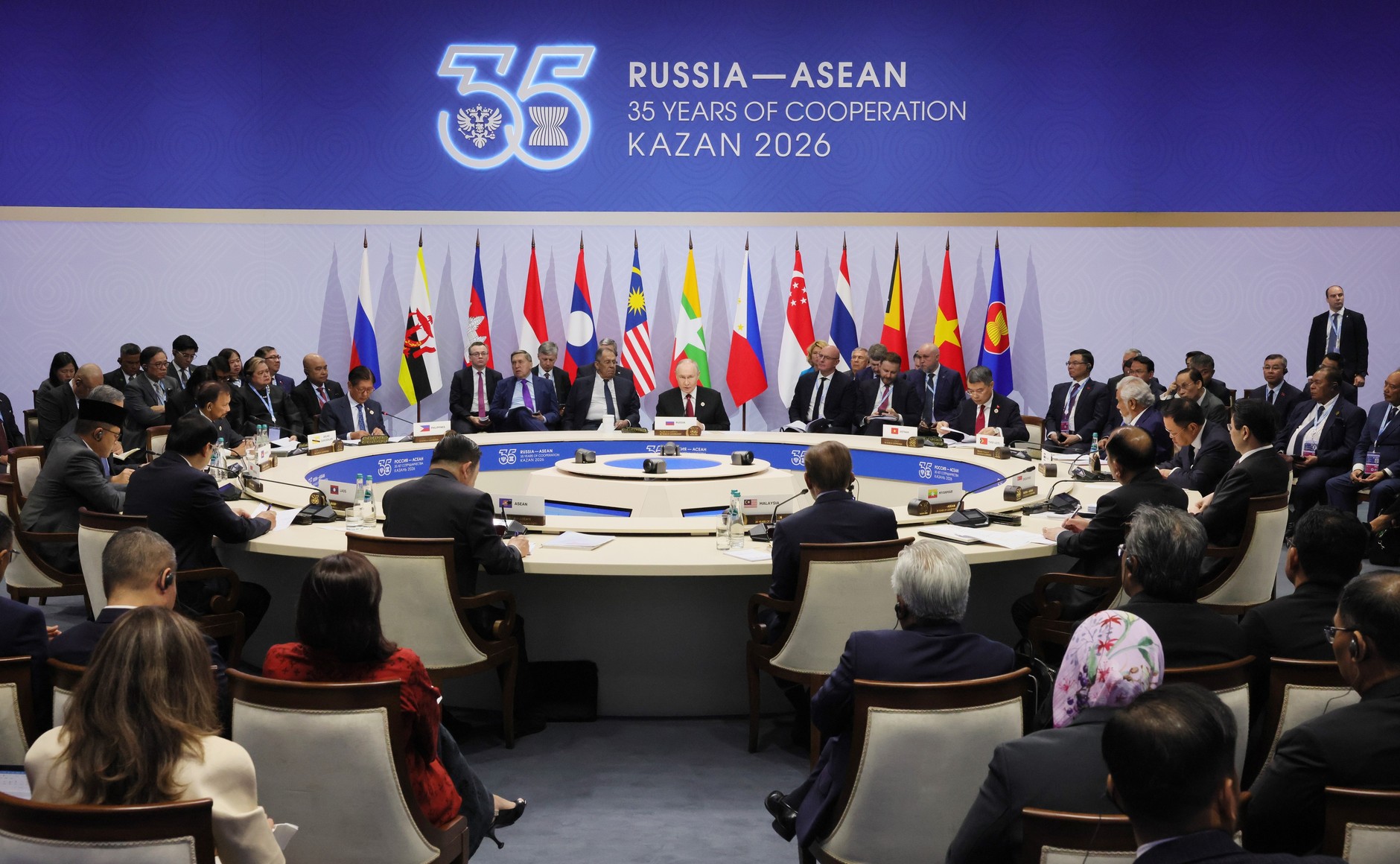
I revisited these notes after reading the results of the ASEAN Summit in Cebu, Philippines, on May 7-8, 2026, which focused on regional resilience, the economy, and the impact of global conflict. President Prabowo Subianto specifically called for a dialogue on peace and global supply chain issues.
The Russo-Ukrainian war, the ongoing Israeli invasion of Palestine, and the Israel-Iran war, with the United States dragged into it, made the same point twice over. The rivalry between Washington, Beijing, and Moscow now reaches into trade, semiconductors and nickel and lithium, AI chips, undersea cables, and shipping lanes.
What this moment requires is a different diplomatic imagination. Great powers tend to frame the world through rivalry, deterrence, and spheres of influence. Middle powers can offer a different logic. Stability without domination. Sovereignty without isolation. Multilateral commitment that does not pretend power has disappeared. ASEAN sits squarely inside that opening, whether or not it always recognizes the fact.
Strategic Role
ASEAN has around 680 million people, located in the Pacific and Indian Oceans as one of the busiest sea lanes, and manufacturing networks plugged into nearly every supply chain that touches Asia. This region has also fast-growing markets in digital services, green industry, food systems, and the energy transition. They are the building blocks of a strategic middle power, provided ASEAN actually uses them.
ASEAN's strength has never come from military hardware. It comes from the ability to keep a room open when great powers would prefer to walk out of it. That way has successfully kept Southeast Asia out of major interstate war for close to half a century. That is not nothing, given how different the ten members are from one another in political system, religion, language, economic size, and historical grievance. The bloc has endured because it has consistently chosen consultation over coercion, and stability over ideological uniformity.
If ASEAN holds together, it can act as a buffer against great-power collision. It faces a two-way risk, however: becoming a proxy for Washington, Beijing, Moscow, or any other capital that decides it needs the region; or hiding behind neutrality when international law, sovereignty, or human dignity is openly violated. But that neutrality becomes moral emptiness. What ASEAN needs is principled neutrality: the refusal to align militarily, paired with a steady defense of peace, sovereignty, civilian protection, and the rules that small and middle states actually depend on for survival.
ASEAN must take its geo-economic agency more seriously than it currently does. Economic policy and security policy are converging faster than most officials are prepared for. ASEAN can benefit from the shift, but only if it invests in human capital, in regulatory quality, in infrastructure connectivity, and in technological capability. Without those reforms, the region will keep functioning as a production base and a market that others design. With them, ASEAN can move from rule-taker to rule-shaper.
Dynamic equilibrium
War often follows when a rising power threatens to displace an established one. John Mearsheimer's offensive realism adds that in an anarchic system great powers chase dominance simply to feel secure. The theories explain the danger we are watching. They should not be allowed to dictate the future.
This is why ASEAN and other middle powers must push a dynamic equilibrium. It is more active, and more inclusive, than the static version. Dynamic equilibrium does not ask states to suppress their national interests. It asks them to manage those interests through restraint, dialogue, reciprocity, and shared rules. It rejects the domination of any single power. It also rejects the fatalism that treats war as inevitable. What it tries to create is diplomatic space in which rivals can compete without breaking the system that allows them to compete peacefully to begin with.
What does this look like in practice? Four areas come to mind. First, preventive diplomacy. The instruments already exist: the East Asia Summit, the ASEAN Regional Forum, the ASEAN Defense Ministers’ Meeting-Plus (ADMM-Plus). They have to engage the real risks of the moment, which is to say the South China Sea, the Taiwan Strait, the Korean Peninsula, Myanmar, cyber conflict, and maritime security. Alongside that, the region needs to push harder on norms. Freedom of navigation, procedures that prevent accidental escalation, ways to make coercive behavior in contested waters more expensive, politically and diplomatically, for whoever tries it.
Second, peace and development have to travel together. The conflicts of this decade do not travel alone. They show up with inflation, with debt distress, with energy insecurity, with food disruption, with climate disasters, with forced migration. A region cannot keep the peace if inequality is widening and ecosystems are collapsing at the same time. So, climate finance, disaster resilience, energy transition, and food security belong at the center of how ASEAN does diplomacy, not at the edges where we used to put them. Climate change, in the end, may be the ultimate crisis. It crosses every border. And it punishes hardest the countries that contributed least to historical emissions.
Third, human capital. We tend to treat education, science, technology, and public health as social spending, separate from foreign policy. They are not separate. Countries with thin research capacity, weak education systems, low productivity, and poor digital infrastructure cannot meaningfully shape global rules, regardless of which forums invite them in. A stronger ASEAN needs citizens who can compete in high-value industries, sit across the table in complex negotiations, and defend democratic accountability in an increasingly automated public sphere.
Fourth, and finally, leadership. The future of the global order is not going to be settled in Washington, Beijing, or Moscow by themselves. The world needs credible middle powers, the kind that can keep rivalry from sliding into catastrophe. ASEAN has what it needs on paper: the history, the geography, the demographic weight, the diplomatic instinct. Whether the bloc converts those assets into a coherent collective strategy, and whether it does so in time, is now the only question worth asking. A turbulent century has no use for ASEAN as a silent bystander. It needs ASEAN as a stabilizer, as a bridge-builder, and as a guardian of what I have called here, dynamic equilibrium.

Hadi Prayitno is an Indonesian public finance and budget policy specialist with over two decades of experience in governance, research, and capacity development. He leads The Reform Initiatives (TRI) as Executive Director. His work focuses on strengthening budget transparency and social accountability, supporting decentralization, and advancing climate-responsive budgeting.
In "Structural Aseanisation," Aniello Ianone explores Europe's strategic shift in...
In this article, Aniello Iannone critically evaluates the ten-year trajectory...
The global order is moving beyond rigid bloc politics toward...
In this article, Luo Chen Jun highlights a striking historical...
In this article, Muhamad Ferdy Firmansyah highlights how climate technology...
In his latest article, Aniello Iannone examines the gap between...
This article analyzes Indonesia's ambitious military modernization through its strategic...
DeepRare is being hailed as a major breakthrough in the...
This article analyzes President Prabowo’s decision to skip the June...
This article analyzes the phenomenon of "sibling rivalry" at the...
This article evaluates the normative frameworks offered by China’s four...
This article examines the 2025 Thailand–Cambodia border conflict to evaluate...
This article examines the May 2026 ASEAN Summit in Cebu...
This article examines the May 2026 Beijing summit between Xi...
This article examines how the rise of narcissistic foreign policy—exemplified...
In October 2025, Indonesia's President Prabowo Subianto announced that Portuguese...
This article argues that recent U.S.–Israel military actions against Iran...
This article examines Türkiye’s evolving "Third Way" in Africa, an...
This article critically examines Indonesia’s evolving role from a quiet...
This article provides a firsthand account of how Pakistan emerged...
This article examines how disruptions in the Strait of Hormuz...
This article examines Indonesia’s participation in the Board of Peace...
This article examines what the attempted sale of CK Hutchison's...
This article examines the Kudankulam Nuclear Power Plant as a...




.jpg)
Leave A Comment