
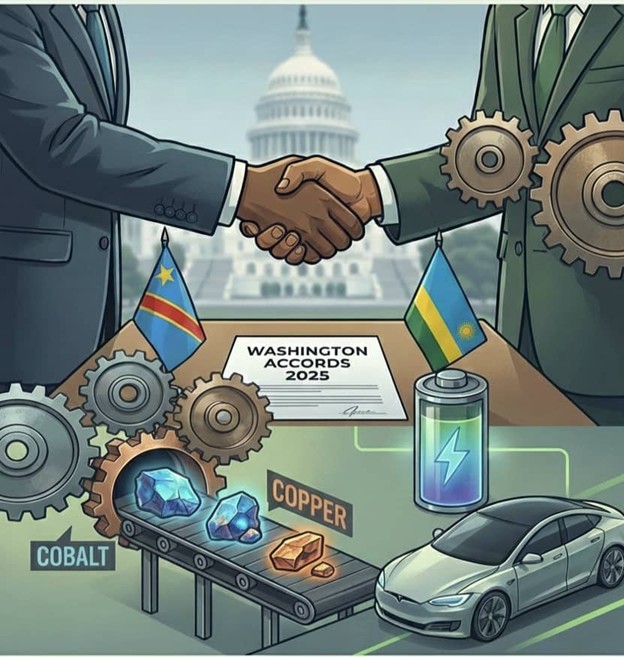
On December 4rd, 2025, two African leaders, DR Congo's President Félix Tshisekedi and his Rwandan counterpart Paul Kagame sat across the table and made hard promises in Washington at the signing ceremony to endorse the Washington Accords, a deal agreed on June 27, 2025 to end the decades-long war in Eastern Congo. The peace agreement between the Democratic Republic of the Congo (DRC) and Rwanda was packaged as a historic milestone, peace in a region that had been marred by war. What did not appear on the front page and buried in the developing system of economic integration was an audacious and very bold proposal to open up the DRC reserves of cobalt, copper, tantalum and other critical minerals vital to batteries and green technology. And that begs a question, whose peace is this, and what provision is it really designed to procure? The agreement also indicates a greater change that is being undertaken in international climate policy. The struggle against emissions and climate justice is increasingly matching and even giving way to a strategic scramble for mineral supply. And in the midst of all of these, African lives are at a risk of being a collateral in that calculus, not in the form of explicit aggression but in the form of structural marginalization and sacrifice that is being carried in the name of a clean future.
In order to understand this, we have to map out the contours first. DRC is the largest producer of cobalt in the world (more than 70 percent), as well as copper and other battery-grade minerals, so it is a key node to clean energy supply chains. The demand is skyrocketing: with the growth of electric vehicles, grid-storage and renewable-energy implementations across the globe, the demand of cobalt, lithium, copper and other similar metals is expected to grow twice, or even more, before the year 2030.
Meanwhile, the eastern portion of the DRC, where the vast majority of this wealth is concentrated, has suffered decades of violence, militia rule, unlawful mining and displacement. The 2025 agreement, which was brokered by the US and allies, offered to withdraw the troops, disarmament, and cooperation in the region. It also entrenched a mineral-trade system, which opened up the door to western businesses and investors.
To most people present at the ceremony, the message was obvious. U.S. authorities presented the agreement as a move not just to bring peace, but also as a hedging move against resource inefficiency to the clean-tech sectors. That two-sided framing - of diplomacy and acquisition of resources - makes what appears to be climate-consistent collaboration a measured resource agreement.
But this change comes with contradictions. M23, the strongest rebel group in the region on the ground, was not included in the agreement. M23 strengthened its grip over the main mining areas and introduced administrative frameworks less than six months after the accord, taxing mineral mining, despite the world observing the so-called peace breakthrough.
To the communities around the mines, most of whom have already suffered decades of violence and displacement, the deal appears like business-as-usual by another name. Human-right groups have cautioned that the pact does not provide any actual restitutions and no restitution/justice mechanisms. And despite these promises that the accord will see open trade and collaboration, the very fabric of extraction is vulnerable to exploitation, shady transactions, and corruption by the elites.
There is a third dynamic at play: pragmatic economics. To a nation that is languishing in instability, the revenues of mining present a very alluring way to both development and rebuilding. The government of the DRC, via its state-owned mining company Gécamines, hastened into an alliance with a giant international commodities trader to sell copper and cobalt, a move that shows that investors are not waiting around until things get better; they are betting on it.
But even this practical situation comes at a high price. The markets in the crucial-mineral are also known to be extremely volatile: recent scholarly modelling cautions that such metals as cobalt, lithium, copper and nickel face deep fluctuations as the supply limits, recycling, technological changes and geopolitical rivalry intersect. What appears as a secure supply agreement may, as the world demand fluctuates or new battery chemistry is developed, turn into a dead asset, leaving societies and states in suspense.
This is the fault line behind the applause in Washington that is rooted in global power politics, economic pragmatism, and human justice. It is a new stage in climate politics, not a time of collective sacrifice and collective mitigation, but of acquiring minerals in weak and war-torn countries.
That creates some pressing ethical concerns: can peace agreements be both resource transactions and not jeopardize sovereignty, justice or long-term stability? Is it possible to create green supply chains without rights, reparation and local involvement? And most of all: who is paying the cost of the international clean energy push?
As a start, even though it might be very difficult to implement, it has to be done; Climate diplomacy should do more than negotiate access to minerals to be credible, particularly to the nations that are at the forefront of both mining and climate change. It should respect human dignity, environmental management and fair benefit-sharing. This implies a very strong commitment to open and transparent governance, local approval, environmental conservation, and local development, not only to the profit margins.
It involves the inclusion of resource justice in climate diplomacy, in such a way that the shift to a low-carbon future does not continue the past patterns of exploitation under green rhetoric. It is the rejection of the fact that communities that endured decades of violence, displacement and mining-related degradation are now supposed to be the foundation of the battery revolution in the world.
Should the DRC - Rwanda peace accord turn into a manual on the so-called mineral-first diplomacy, without justice and accountability, then the pledge of a green transition will sound empty. However, when it is transformed into a prototype of inclusive, transparent and fair resource governance, with rights, protection, and dignity embedded in it, it has the potential to redefine climate diplomacy.
As such, the decision, and the responsibility, rests with world leaders, investors and diplomats. To millions of Congolese who have almost the entirety of their lives under the shade of mines and militias, the world is on the lookout and history will take account of the direction we took.

Muhammad Ibrahim Suleiman is an Industrial Chemistry graduate and a Master of Public Policy (Climate Change) candidate at the Indonesian International Islamic University (UIII). He has a strong interest in bridging science, sustainability, and public policy. His experience spans environmental research, industrial waste management, climate diplomacy, and community development aligned with the Sustainable Development Goals. He brings an interdisciplinary, impact-oriented approach informed by research, healthcare support, and leadership roles in addressing climate and development challenges.
This article examines how the systemic failure of urban waste...
Indonesia is spending Rp 75.8 trillion (around US$4.7 billion) building...
This article analyzes climate vulnerability across Economic Community of West...
This article argues that addressing climate change in the Global...
This article examines Indonesia’s transition from reactive emergency disaster spending...
This article examines the DRC–Rwanda peace accord through the lens...
This article offers a comparative reflection on how Islam has...
This article examines how youth-led, digitally networked movements are reshaping...
This article examines why forest-based approaches remain critical for addressing...
This article exposes the injustice of Afghanistan’s exclusion from COP30...
This article highlights the significant emotional and mental health burden...
This article defines Code Green as a model of public...
This article analyzes how China’s ambitious green transition serves not...
This article traces how the 2025 UN General Assembly turned...
This article looks at how Indonesia’s provinces with extensive biodiversity...
This article examines how climate change and privatization intersect to...
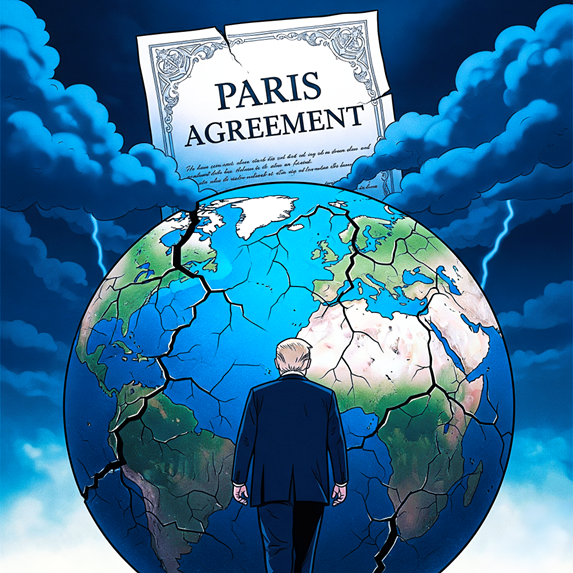
This article analyzes how Trump’s second time withdrawal from the...
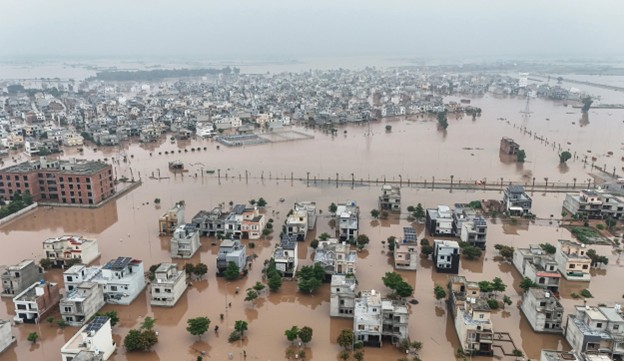
This article critically analyses Pakistan’s worst floods ranging from the...
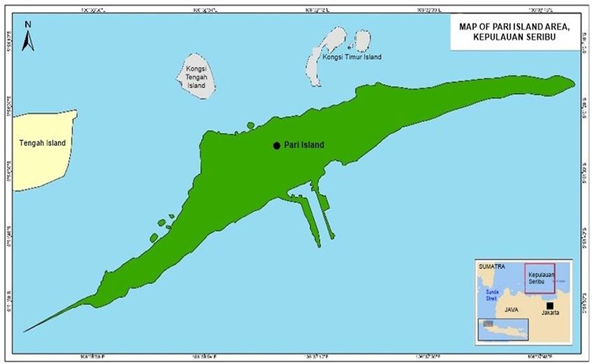
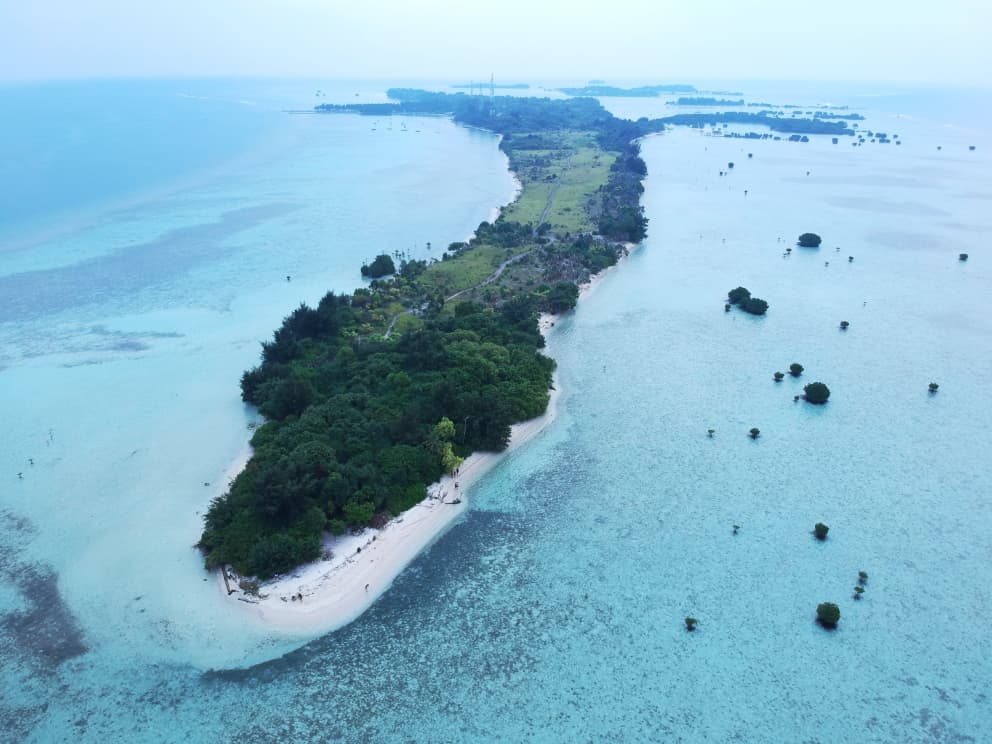
This article examines the climate vulnerabilities of Pari Island in...
This article traces how Pari Island in Jakarta’s Thousand Islands...
This article explores how ecotourism in Indonesia’s Thousand Islands generates...
This article compares how U.S. Presidents Joe Biden and Donald...
This article explores the devastating impact of human activities such...
This article critically examines the European Union’s Carbon Border Adjustment...





Leave A Comment