

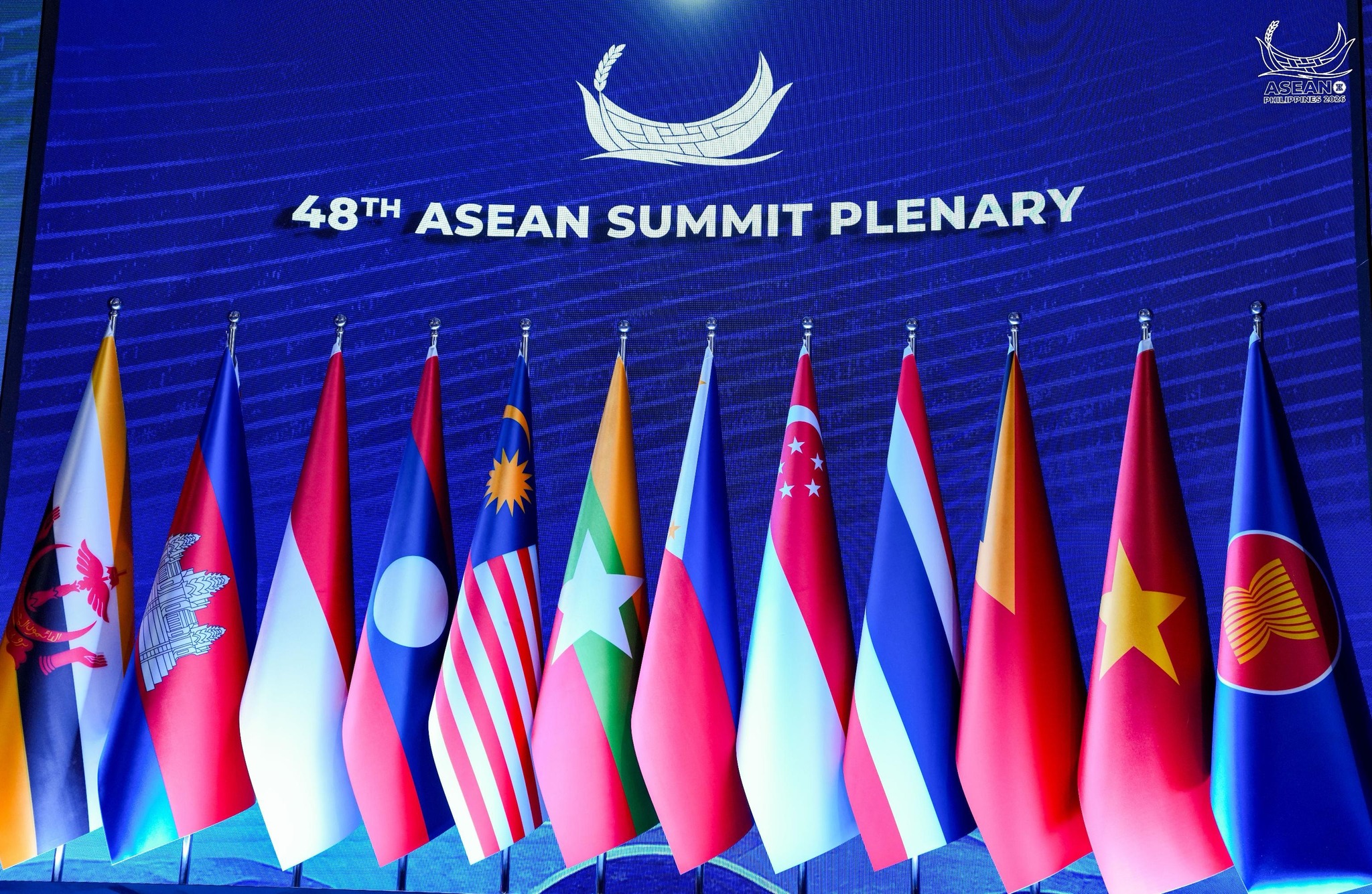
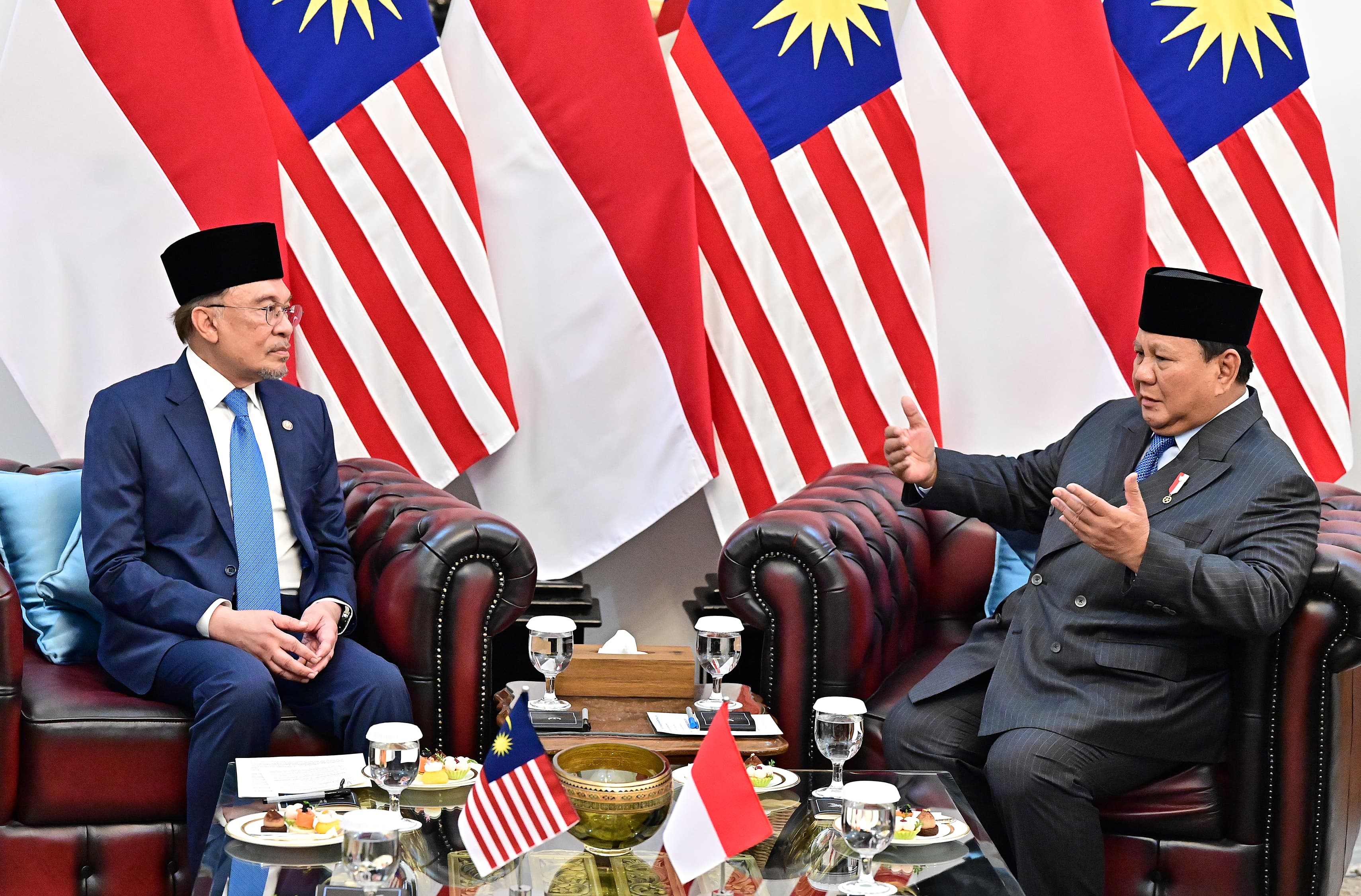
The 46th ASEAN Summit, which was hosted in Kuala Lumpur as part of the Malaysian chairmanship of ASEAN, was a landmark event in terms of the strategic projection of the country in the region. At a time when the climate is being marked by the growing great power competition and the apparent institutional fatigue inside the organisation, Prime Minister Anwar Ibrahim used the occasion not only to undertake a representative role, but also to reassert the Malaysian placing in a Southeast Asia that is being marked strongly by growing external pressures and disintegrative internal processes. His diplomatic performance, calm, goal-oriented and highly conscious of the asymmetrical power dynamics of the region, reflect an approach at maximising national agency in an increasingly very fragile and contested multilateral order.
ASEAN today appears weakened by very profound strategic fragmentation. The differences between its member states, both in terms of diverging geopolitical orientations as well as different levels of economic interdependence and differing security priorities have grievously undermined the capacity of the bloc to act as a very unified political force. The principle of non-interference which has long been hailed as a great pillar of regional stability, has increasingly turned into a stumbling block to effective decision-making. However, instead of promoting true cohesion, it now covers up the lack of shared strategic vision and turns ASEAN into a procedural construct, as opposed to a functioning security community. In this fractured landscape, Anwar Ibrahim has adopted a very realist stance, detaching Malaysia deliberately away from hollow rhetoric on unity, and instead focusing on the more concrete management of intra-bloc divergences. His main aim is to preserve the strategic manoeuvrability of Malaysia in an environment where normative alignment is no longer guaranteed.
In the South China Sea, now a central theatre of great power competition, Malaysia has reaffirmed its sovereign claims while avoiding direct provocations. The strategy being pursued is that of low-intensity assertiveness, to maintain continuous diplomatic engagement with Beijing in order to safeguard national interests without escalating tensions in the region. Such a line of action amounts to a kind of strategic hedging, based upon a clear understanding of structural constraint. Malaysia, lacking the both military and economic weight to independently influence the regional balance of power, tries to avoid becoming trapped in binary alignments by very strongly positioning itself between accommodation and containment. It aims to retain its flexibility, by being open to dialogue as well as to deterrence, without being held hostage to the strategic goals of external powers.
On the economic front, the leadership of Anwar has been characterized by a very proactive move to diversify external relations. Strengthening ties with Gulf Cooperation Council (GCC) countries and joining transregional platforms reflects a logic of reducing geopolitical risk. In a global trade system that is increasingly becoming polarised, Malaysia tries to maximise its economic autonomy by not becoming over dependent on any powerful dominant actor. Within ASEAN, Kuala Lumpur has promoted initiatives in digital and environmental cooperation, however, its results have been modest because of the institutional weakness of the bloc and the absence of convergence between its members. Anwar is quite familiar with those limitations and, therefore steers Malaysian diplomacy towards more flexible forms of collaboration, such as bilateral and mini-lateral arrangements that can deliver tangible dividends in an uncertain regional framework.
In his reformist discourse, Anwar has expressed the necessity to regain the credibility of ASEAN but within realistic terms. The major constraints of the organisation are rooted in its very structure: the absence of binding mechanisms, the rigidity of the non-interference principle, and very strong internal divisions among its member states, render any meaningful transformation highly unlikely. The Myanmar crisis is a very vivid example of these shortcomings. Although Malaysia has voiced its support of more ASEAN involvement, it has refrained from taking a position in favour of sanctions or diplomatic escalation. The overall strategy continues to be that of managing what is possible, in a context where solidarity and the ability to enforce rules is limited.
The strategy of Anwar can be seen as a logical reaction to the structural limitations of the regional setting. Fully aware of its status as a middle power, Malaysia seeks to remain relevant and also influential without ambitious leadership goals. The goal is not to reform ASEAN but to avoid marginalisation, discreetly influence the direction of regional dynamics, and keep open multiple channels for dialogue and negotiation. Rather than aspiring to regional leadership, Malaysia pursues a positioning diplomacy, grounded in interest calculation, adaptability, and a realistic reading of systemic dynamics.
Anwar Ibrahim does not propose a refounding of the regional order, but rather a posture of vigilance and containment, pragmatism and selectivity. In a context where great powers increasingly instrumentalise multilateralism and regional organisations lose efficacy, Malaysia chooses to remain in the game, without illusions, but with strategic clarity. In this scenario, agency does not stem from material power or normative superiority, but from the capacity to read systemic constraints and manoeuvre within them without being crushed. It is precisely within this difficult yet necessary balance that the logic of Malaysia’s foreign policy under Anwar is inscribed.

Aniello Iannone is a lecturer in Indonesian and Southeast Asian Politics at the Department of Political Science and Government, Diponegoro University. His research focuses on Indonesian politics, ASEAN as a regional actor, and comparative and international politics in Southeast Asia.
In this article, Aniello Iannone critically evaluates the ten-year trajectory...
The global order is moving beyond rigid bloc politics toward...
In this article, Luo Chen Jun highlights a striking historical...
In this article, Muhamad Ferdy Firmansyah highlights how climate technology...
In his latest article, Aniello Iannone examines the gap between...
This article analyzes Indonesia's ambitious military modernization through its strategic...
DeepRare is being hailed as a major breakthrough in the...
This article analyzes President Prabowo’s decision to skip the June...
This article analyzes the phenomenon of "sibling rivalry" at the...
This article evaluates the normative frameworks offered by China’s four...
This article examines the 2025 Thailand–Cambodia border conflict to evaluate...
This article examines the May 2026 ASEAN Summit in Cebu...
This article examines the May 2026 Beijing summit between Xi...
This article examines how the rise of narcissistic foreign policy—exemplified...
In October 2025, Indonesia's President Prabowo Subianto announced that Portuguese...
This article argues that recent U.S.–Israel military actions against Iran...
This article examines Türkiye’s evolving "Third Way" in Africa, an...
This article critically examines Indonesia’s evolving role from a quiet...
This article provides a firsthand account of how Pakistan emerged...
This article examines how disruptions in the Strait of Hormuz...
This article examines Indonesia’s participation in the Board of Peace...
This article examines what the attempted sale of CK Hutchison's...
This article examines the Kudankulam Nuclear Power Plant as a...
This article examines Nepal’s strategic position within the Indo-Pacific and...





Leave A Comment