
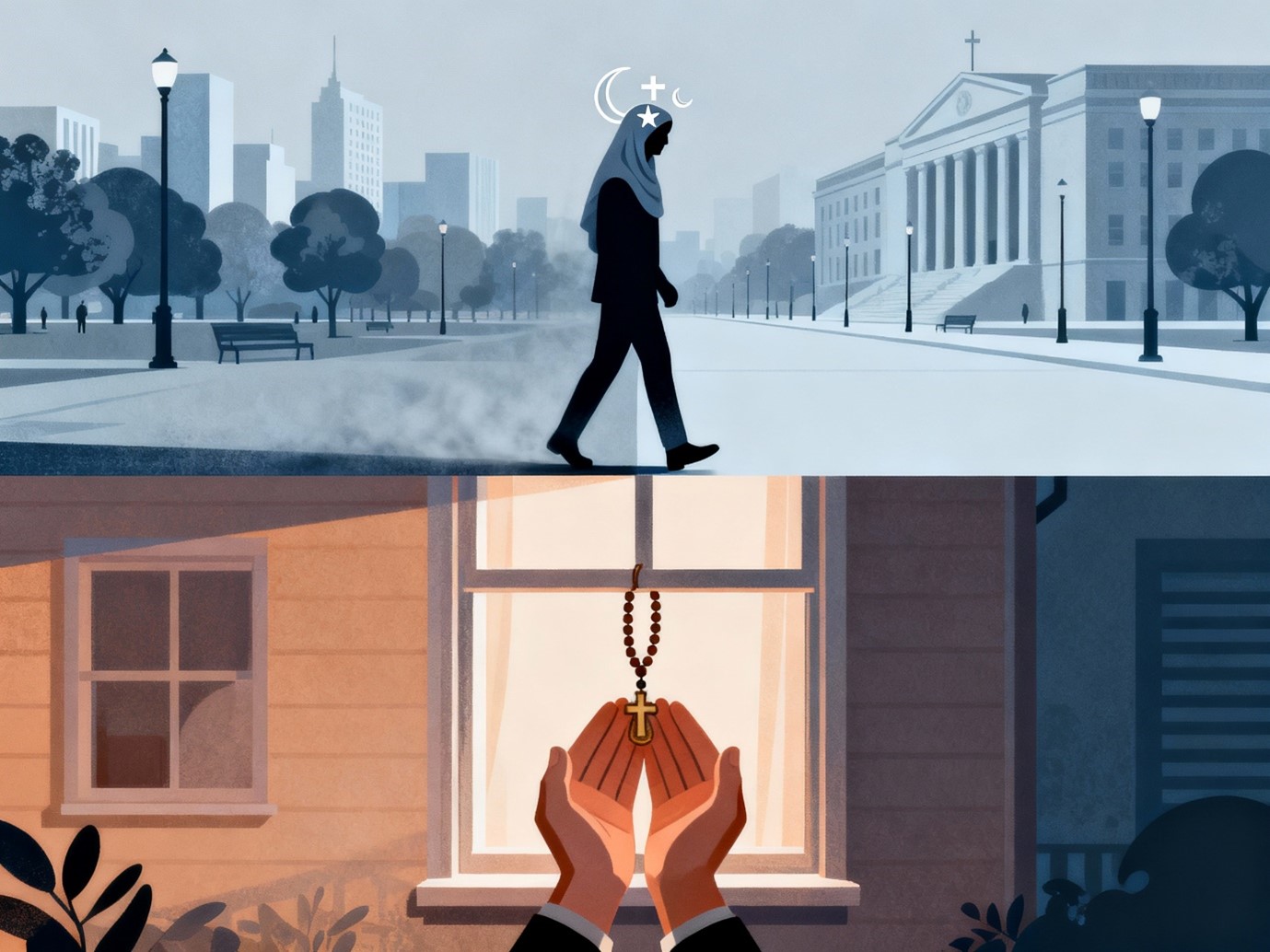
We aim to conduct a critical exploration of a hypothetical policy that fully privatizes religion. i.e., citizens may no longer display or represent their religion in any public place through prayer, recitation, promotion, clothing/symbols, conversion activities, or public debates. A religious exercise can only be confined to private homes or designated houses of worship. While this paper primarily explores the policy of privatizing faith, restricting religious expression to private spheres, it is crucial to also consider the policy of anonymizing religion, which seeks to obscure or prevent the disclosure of religious identity in public and official contexts. This approach involves measures such as forbidding government officials, employers, and private actors from inquiring about religious beliefs, excluding faith from public records, ID cards, and censuses, and prohibiting individuals from publicly declaring or promoting their religion.
Human Rights Foundations: Freedom, Manifestation, and Legal Limits
A natural starting point is international human rights law, which draws a firm line between the inner freedom of belief and the outward manifestation of religion. Article 18 of the International Covenant on Civil and Political Rights (ICCPR) guarantees everyone “freedom of thought, conscience and religion,” including the freedom to adopt a belief; this inner forum is absolute. But the ICCPR also protects the manifestation of religion “in worship, observance, practice and teaching,” which states may limit only where restrictions are lawful, necessary, and proportionate to protect public safety, order, health, morals, or the fundamental rights and freedoms of others. This second, protected dimension is directly targeted by a complete prohibition on all forms of religious expression in public areas. The ICCPR's stringent requirements for legality, necessity, and proportionality would apply to any government considering such a policy in OHCHR.
Authoritative guidance reinforces this. In General Comment No. 22, the UN Human Rights Committee clarifies that Article 18 “protects theistic, non-theistic and atheistic beliefs,” and that while internal belief is unconditional, manifestation can be restricted only under the narrow grounds listed in Article 18(3). Importantly, limitations must be “proportionate” and “the least intrusive instrument” among those which might achieve the legitimate aim, as shown in Refworld. A categorical, across-the-board prohibition on any public religious expression, covering clothing, words, gestures, and gatherings, would be difficult to defend as the least intrusive option, because it does not differentiate between conduct that actually threatens public order and conduct that is benign in Human Rights Library.
Comparative jurisprudence shows how courts treat more limited restrictions. In S.A.S. v. The European Court of Human Rights (ECtHR) accepted the government's argument that it was pursuing "living together" and public safety when it upheld France's ban on face-covering clothing in public. Even so, the scope and social impact of that law, which was far less expansive than a complete prohibition on public religious expression, were and are hotly debated justiceinitiative.org. The case does not support a broad privatization of religion, but it does show that targeted, specific restrictions can occasionally withstand judicial scrutiny. A restriction's likelihood of failing the necessity and proportionality tests increases with its breadth and lack of differentiation in Human Rights Law Centre.
The intricacy of "neutrality" is further highlighted by the ECtHR's strategy in Lautsi v. Italy. In the end, the Grand Chamber emphasized states' margins of appreciation and ruled that crucifixes in public school classrooms were not in violation of the Convention. Critics contended that this creates a tension that any privatization model would exacerbate—that is, it allows public institutions to exhibit religious symbols while individuals are subject to restrictions Strasbourg Observers. The conclusion is that courts consider context, history, and pluralism rather than sticking to a straightforward pro- or anti-symbol rule. A general prohibition on all public religious representation would invert that calculus by ignoring context altogether Wikipedia.
Secularism, Neutrality, and Comparative Policy Models
Policy experiments with “strict secularism” offer further lessons. France’s laïcité articulates a strong separation of church and state rooted in the 1905 law and the constitutional identity of the Republic; yet even laïcité does not universally forbid all public religious expression by private citizens. Instead, it emphasizes state neutrality, certain limits in public institutions (especially schools and the civil service), and context-specific rules such as the face-covering law Eurydice. Likewise, Quebec’s Bill 21 prohibits some public employees in positions of authority from wearing religious symbols while on duty—a significant, controversial restriction—but it is not a universal public-space ban. These real-world models show how hard democracies find it to justify even targeted restrictions, let alone an absolute ban across public life.
The stakes are highlighted by empirical research. The number of nations with high or very high government restrictions on religion hit a record high as of 2022, according to the Pew Research Center, which tracks religious restrictions around the world. Aggressive state control does not always result in harmony; rather, it can exacerbate resentment and polarization as in Pew Research Center. This is demonstrated by the fact that increasing restrictions are frequently correlated with increased social hostilities toward religious groups. A universal ban on religious expression in public places could therefore carry a nontrivial risk of backlash, undergroundization of practice, and deteriorating social trust, especially among minorities.
Social Peace, Equality Claims, and Risks of Backlash
Proponents of a privatization policy might advance several arguments. First, they might argue that limiting religion to private and designated sacred areas promotes equality among people in public by avoiding pressure to convert, sectarian rivalry, or symbolic domination in public areas. Second, they might contend that uniform regulations make administration easier because they eliminate the need for officials to decide which symbols or rituals are acceptable. Third, the policy might be presented as preventing conflict and preserving public order. Yet each rationale must be tested against the Article 18(3) standard. A measure is not “necessary” merely because it is simpler. And if less restrictive alternatives exist—neutral time, place, and manner rules; content-neutral noise limits; fair-access permitting; narrowly tailored safety protocols—they must be preferred.
In liberal democracies, public space is also a speech forum. U.S. First Amendment doctrine distinguishes among traditional public forums (streets, parks), designated public forums, and limited forums, each with specific rules about permissible restrictions. Governments may impose reasonable, content-neutral time, place, and manner regulations and may structure limited forums, but they may not discriminate by viewpoint as shown in Legal Information Institute. A categorical ban on “religious” expression risks both content and viewpoint discrimination: it singles out a subject matter (religion) and disfavored viewpoints (religious perspectives) relative to secular analogues (e.g., philosophical advocacy). Even outside the United States, the underlying free-expression logic appears in many constitutional systems and international standards.
There are also practical problems of line-drawing and enforcement. What counts as “public”? Streets, parks, universities, state buildings, public transit, quasi-public shopping malls? Would a quiet prayer before a meal in a public square be illegal? Would wearing a small pendant, a turban, a yarmulke, a hijab, or a cross be prohibited—and how would the state justify banning ordinary clothing choices that carry religious significance? Under human rights law, the manifestation of religion typically includes wearing symbols and attire, observing dietary rules, and sharing beliefs. A policy that criminalizes such ordinary, peaceful behavior in all public spaces would almost certainly be overbroad and chill both religious exercise and general free expression.
If the aim is pluralism, there are better-tested tools. Governments can maintain institutional neutrality (especially in schools and core state functions), ensure equal access to public forums through viewpoint-neutral permitting, enforce noise and obstruction ordinances, and prosecute harassment or coercion regardless of the perpetrator’s motive. They can also protect nonbelievers and minority faiths against discrimination by adopting robust anti-bias rules. International instruments like the Universal Declaration of Human Rights and the ICCPR are structured to balance freedom of religion with the rights of others through tailored, proportionate limits, not through categorical bans that privatize belief.
So, a policy that privatizes religion by forbidding all public religious representation appears normatively undesirable and legally vulnerable. It conflicts with the architecture of international human rights, which treats manifestation as a public good to be limited only when necessary and proportionate. Comparative practice shows that even narrower measures spark deep controversy and litigation, while empirical research suggests that high-restriction environments do not reliably deliver social peace. A democratic state committed to equality and pluralism should prefer precise, neutral, and evidence-based regulations that protect everyone’s rights in shared spaces. The more a policy erases differences from public life, the more it risks undermining the very civic respect and cohesion it seeks to achieve.
Proponents of privatizing religion frequently contend that by eliminating outward signs of division from public life, such a policy could lessen religious conflict. Public disagreements over religious displays, proselytizing, or perceived partiality by authorities toward one group over another are often the catalysts for sectarian tension outbreaks. The goal of the policy would be to prevent these triggers from turning into open hostility by restricting religious dress, proselytizing, prayer, recitation, and conversion activities to private residences or approved places of worship.
Establishing a shared civic area that is symbolically "religion-free" is one possible advantage. Conflicting religious claims would no longer be heard in public spaces like streets, marketplaces, schools, and government buildings. Instead of acting as outward manifestations of various religious communities, citizens would engage with one another as equal participants.
This might reduce mutual suspicion, especially in societies where one religious group has historically dominated public space or where minorities feel intimidated. For example, international studies of sectarian violence show that clashes often erupt over public rituals, processions, or competing claims to visibility in shared areas. Theoretically, removing these intense public displays could reduce the likelihood of conflict. Additionally, governments may find it simpler to maintain neutrality if religion is privatized. Accusations of bias decrease when officials are not in charge of determining which religious symbols are permitted in schools or which organizations are permitted to stage protests in the streets. This administrative simplicity might prevent governments from appearing to endorse or suppress a particular faith, which is often a source of resentment.
The policy could also reduce the “competition for converts” in public space, a common flashpoint in multi-faith societies. By moving evangelism and conversion discussions into private or sacred venues, tensions over perceived “aggressive proselytizing” would diminish. Similar reasoning applies to banning public religious debates, which frequently inflame tempers rather than foster mutual understanding. In volatile contexts—where mistrust among communities runs high—supporters might frame privatization as a temporary peace-building measure: a way to cool down the social climate while dialogue and reconciliation efforts take place. In theory, if all groups are equally restricted, no single faith appears privileged, which could foster a sense of fairness. However, these potential benefits must be balanced against serious downsides: the loss of personal freedoms, likely resistance from believers, and the risk that suppressing public faith expression merely drives conflict underground rather than resolving root causes. Even if privatization could reduce visible flashpoints, it may not address deeper grievances of discrimination, inequality, or political manipulation of religion.
Anonymizing Religion and the Limits of State Power
From a normative perspective, anonymization raises foundational questions about individual identity, personal autonomy, and freedom of expression. Recognizing religion as a core aspect of personal identity, the policy of anonymizing faith risks reducing individuals to a state of religious invisibility, potentially eroding their capacity for self-expression, community engagement, and cultural continuity. Such measures may be perceived as undermining the dignity of individuals by denying them the right to openly share and manifest their beliefs, which is essential for authentic religious practice and personal integrity. Moreover, anonymization can be viewed as a form of social erasure, aiming to diminish the role of religion in public life in hopes of promoting civic equality or suppressing division. However, empirical and normative analysis suggests that silencing religious identities does not necessarily eliminate tensions or conflicts but can instead foster feelings of marginalization and alienation, which may exacerbate social divides rather than resolve them.
The legal implications of this study are that the policy of anonymization encounters significant challenges rooted in international human rights law. Article 18 of the ICCPR explicitly recognizes both the freedom of belief and the freedom to manifest religion or belief, including outward expressions such as clothing, symbols, and practices. These provisions are complemented by General Comment No. 22, which emphasizes that restrictions on manifestation must be necessary, proportionate, and carefully tailored. Blanket prohibitions on religious expression, such as forbidding individuals from publicly declaring their faith or symbolically representing religion, would likely constitute disproportionate restrictions and thus violate obligations under international law. Furthermore, courts and human rights bodies have historically upheld individuals' rights to manifest their religion in public, provided that such expression does not threaten public order or other fundamental rights. For example, the European Court of Human Rights has upheld restrictions on face-covering garments when justified by public safety or the preservation of social cohesion; yet, these are limited, targeted measures rather than comprehensive bans on outward religious expression. A universal policy of anonymization, by contrast, would be difficult to defend legally due to its broad and restrictive nature.
The practical implications of this study are that implementing an anonymization policy faces substantial practical hurdles. First, defining and enforcing what constitutes "public" versus "private" spaces would be complex and contentious, with potential overreach in areas such as streets, parks, educational institutions, and transportation. For instance, would ordinary clothing with religious symbols be prohibited? Would wearing a religious pendant or head covering in public space be criminalized? Such measures would likely infringe upon peaceful and ordinary religious expressions protected under human rights law
Finally, this analysis demonstrates that completely privatizing religion through a blanket prohibition of public religious expression is neither legally viable nor desirable from a social perspective. International human rights law clearly delineates between the absolute freedom of belief and the limited, necessary, and proportionate restrictions on outward manifestations of religion. Empirical evidence shows that broad bans on religious symbols, practices, or public debates often provoke backlash, underground practice, and increased social polarization, rather than fostering genuine harmony. Instead, more nuanced and targeted policies such as maintaining institutional neutrality, regulating conduct in public spaces, and allowing context-specific limits offer a balanced approach that safeguards individual freedoms while promoting social cohesion. Ultimately, retaining space for religious expression in public life, within a framework of carefully designed and evidence-based restrictions, best supports the ideals of pluralism, equality, and democratic stability.

Muhammad Younus is a doctoral researcher in Government Science at Universitas Muhammadiyah Yogyakarta (UMY), Indonesia, with a background in Computer Science and Public Administration. His work focuses on digital governance, citizen participation, and sustainable public service innovation across Southeast and South Asia. He has authored over 60 international publications.
In "Lebanon's chronic blackout issue is not just an engineering...
This article asks whether Indonesia is showing early symptoms of...
This article documents the systematic repression of Pan-African activists, journalists,...
This article looks at how Pakistan's 2024 General Elections were...
This article examines the tragic death of a child in...
This article examines poverty alleviation efforts in Kebumen Regency, Central...
This article critically examines Indonesia’s Makan Bergizi Gratis (MBG) programme,...
This article examines the socio-political impact of Pandji Pragiwaksono’s stand-up...
This article examines the persistent "political masculinity" in Indonesia, 41...
This article examines why Islamic political parties in Indonesia remain...
This article examines the global rise of school meal programs,...
This article examines Dhurandhar not merely as a commercial Bollywood...
This article highlight the development of IT that has been...
This article explores how Afghan women are using social commerce...
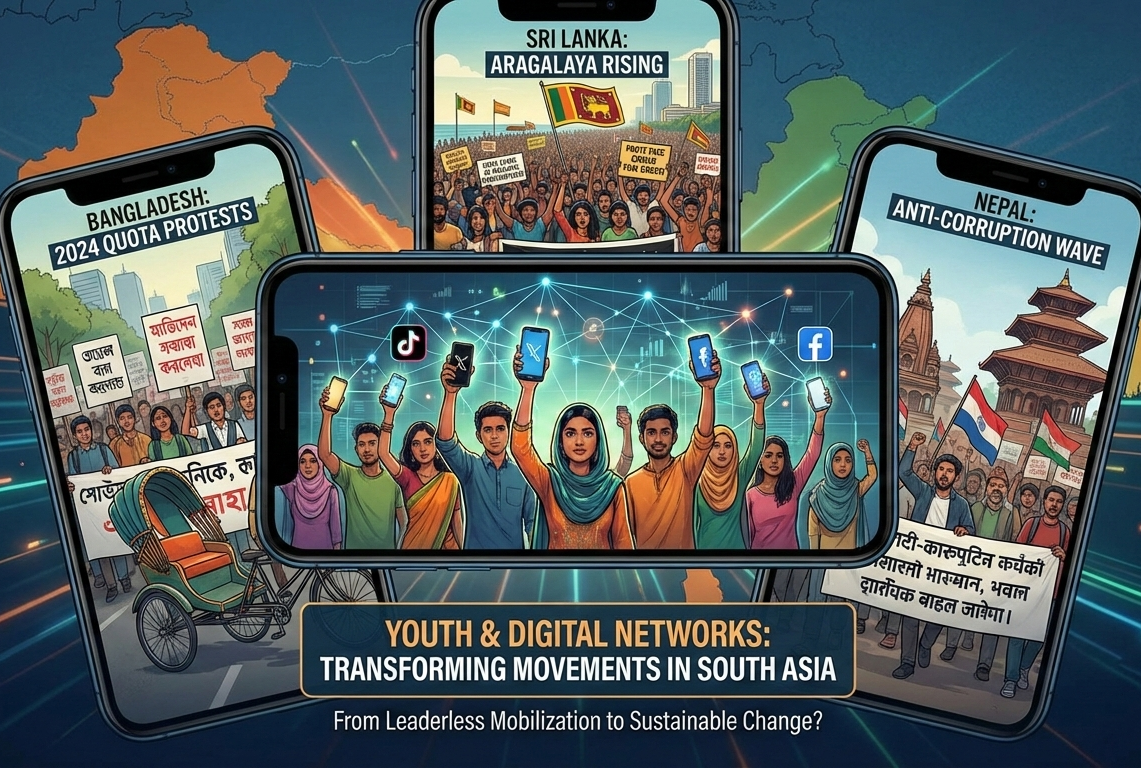
This article examines how youth-led, digitally networked movements are reshaping...
This article examines proposals to privatize religion not as neutral...
This article traces how a tense India-Pakistan cricket game, complete...
This article explains how the Pakistan-Saudi Arabia Strategic Mutual Defence...
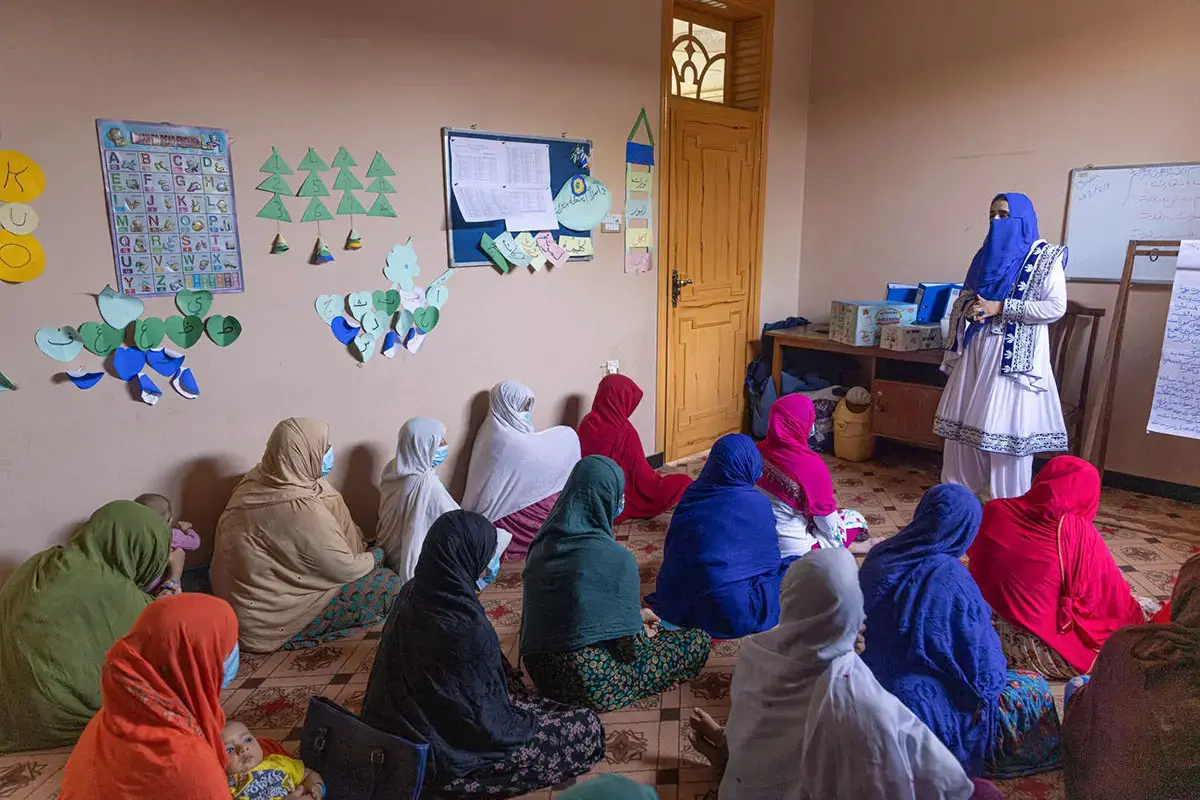
This article examines how Afghan women have transformed the struggle...
This article explores how special autonomy in Aceh and Bangsamoro...
This article examines how Malaysia’s political economy sustains social harmony...
This article critiques the Global Innovation Index (GII) for overlooking...
This article examines how technology has become a highly contested...
This article takes a deep dive into Indonesia’s evolving struggle...










Leave A Comment