
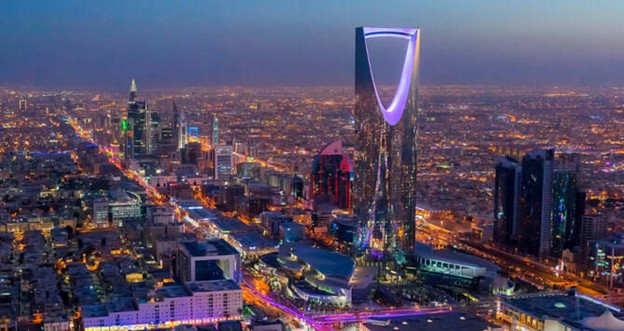
Image credit: Riyadh emerges as Gulf evacuation hub for wealthy amid regional escalation, ArabNews
When Israel and the United States launched Operation Epic Fury on 28 February, the skylines of Riyadh, Doha, and Dubai turned hazy under Iranian retaliatory strikes. The consequential chain of events that followed this blatant act by Washington made one reality explicitly clear: the long-held image of the United States as the uncontested security guarantor of West Asia may well be over, much like it began to unravel in the aftermath of Saddam Hussein’s invasion of Kuwait.
The attack on a Gulf capital was not merely a violation of sovereignty; it was a rupture in the regional security imagination.
What followed was unprecedented. The Doha summit of Arab and Islamic nations, previously convened in the aftermath of alleged Israeli violations, delivered a long-overdue message from a platform now carrying historical weight: the Gulf states are no longer passive consumers of externally designed security architectures. They are capable of charting their own security dynamics.
This commitment was not rhetorical, it was operationalised. In the latest U.S.–Iran confrontation, the Gulf displayed an entirely different set of regional security dynamics at play.
The conflict was accompanied by a familiar U.S. military buildup in West Asia, reminiscent of the Iraq invasion era. Gulf leaders repeatedly warned that military intervention in Iran could prove catastrophic. Those warnings went unheeded by Washington and Tel Aviv, and the result was predictable: the Gulf found itself entangled in a conflict not of its making.
One of the most consequential outcomes was the disruption of the Strait of Hormuz, a vital artery through which nearly 20 percent of global energy flows. The effective paralysis of global trade was no longer hypothetical; it became an imminent risk.
Yet, despite sustained attacks on critical infrastructure, desalination plants, refineries, and energy facilities, the Gulf chose restraint over retaliation.
This was not a weakness. It was calculated statecraft.
The Gulf states had every legitimate reason to respond militarily in defence of sovereignty and national security. Instead, they chose to privilege diplomacy over escalation, while still safeguarding their strategic interests without dependence on American security guarantees.
Because it would have taken only one Gulf nation entering the conflict to push West Asia into an irreversible abyss of chaos, where development, economic welfare, and stability would survive only in statistics and history books.
In a multipolar world where two arch-rivals stood at the brink, Saudi Arabia played its hand with a subtlety that caught many off guard.
Signing a mutual defence cooperation agreement with Kyiv, without Washington’s involvement, spoke volumes. Soon after Riyadh, Doha and Dubai followed suit, signalling that this was not an isolated manoeuvre but a broader regional posture.
Simultaneously, reports during the ceasefire revealed that Pakistan had deployed fighter jets, AWACS, refuelling aircraft, at King Abdulaziz Airbase under a Saudi–Pakistan defence pact signed after Israel’s bombing of Doha.
This move carried profound strategic implications.
It effectively signalled the contours of a potential nuclear backed deterrent, deterring Israel from unilateral or false-flag actions, particularly those that could sabotage U.S.–Iran talks. At the same time, Pakistan’s presence served as a calibrated signal to Iran to respect Riyadh’s red lines.
All of this unfolded under what can only be described as chequebook diplomacy.
Reports suggested that Riyadh and Doha committed up to $5 billion in aid to stabilise Pakistan’s foreign reserves, alongside an additional $3 billion from Riyadh to help Islamabad meet debt obligations to the UAE.
At its core this was strategic investment. In an age where wars are fought over nuclear capability, Riyadh secured a form of nuclear deterrence without pursuing nuclearisation itself, simply by deploying economic leverage with precision.
These developments delivered a decisive rebuttal to the outdated notion of petro-dollars, the idea that Gulf economies exist at the mercy of U.S. currency in exchange for oil.
The reality is increasingly the reverse. It is Gulf capital that now influences the flow, direction, and strategic deployment of global finance.
This shift became even more evident during the first official visit of Saudi Crown Prince Mohammed bin Salman to Washington in seven years, ahead of the latest Iran conflict.
The visit signalled something far more consequential than diplomatic routine—it marked a rewriting of the playbook.
Saudi Arabia is no longer operating within the confines of transactional diplomacy. It is deploying economic power as leverage, not dependency, while simultaneously diversifying its strategic partnerships, including defence cooperation with Pakistan.
The visit also marked a thaw in Saudi–U.S. relations after the fallout from the Jamal Khashoggi episode, an issue that resurfaced during the press conference. While President Trump attempted to deflect the moment, MbS addressed it directly, calling it “painful.”
But the centrepiece of the visit was unmistakable: a staggering $1 trillion Saudi investment commitment in the United States.
That figure alone underscored a fundamental shift, who now holds the pen in defining the terms of engagement.
Even more significant was the approval of the F-35 stealth fighter jet deal.
This agreement alters the regional military balance in a profound way. Israel’s long-standing air superiority, central to its doctrine of deterrence, is no longer unchallenged. The introduction of advanced combat capabilities into Saudi hands signals a new strategic equilibrium.
Israeli opposition to the deal was immediate and vocal. Tel Aviv insisted that such a transfer should be conditional upon Saudi-Israeli normalization. President Trump echoed this narrative publicly, suggesting Saudi willingness.
Riyadh’s response was unequivocal.
Normalization remains off the table without a viable two-state solution for Palestine.
Yet, despite refusing normalization, Saudi Arabia secured the deal, a clear diplomatic setback for Israel and a strategic victory for Riyadh.
Another major outcome of the visit was Saudi Arabia’s designation as a Major Non-NATO Ally, a status carrying substantial geopolitical weight.
This move places Riyadh alongside Qatar as the only states in the region with such designation, signalling a quiet but significant recalibration of Washington’s Gulf strategy.
The implications are clear.
First, the long-standing belief that Washington dictates Arab foreign policy in exchange for oil stands exposed. Saudi Arabia demonstrated that it now defines its own terms, accepting what aligns with its interests while rejecting what does not.
Second, it reaffirmed that the Palestinian cause remains central to Saudi policy, neither abandoned nor diluted.
Equally significant was Saudi Arabia’s focus on artificial intelligence and advanced industries during the visit.
Riyadh is no longer content with energy dominance alone. It is leveraging its economic power to integrate into Silicon Valley ecosystems, aiming to engineer its own “Sputnik moment” in global technological competition.
This marks a decisive strategic pivot. By investing in artificial intelligence, semiconductors, and advanced industries, Saudi Arabia is not merely diversifying its economy, it is future-proofing it. The goal is clear: to transition from an energy superpower to a technological and innovation hub. And in doing so, the Gulf is signalling that its influence in the global order will not be confined to oil, but will extend to the very architecture of the future.
And the urgency of this economic diversification has only been amplified by the events of the past month. The disruption in the Strait of Hormuz, and Washington’s subsequent gunboat diplomacy through a naval blockade during the ongoing U.S., Iran conflict, has laid bare a structural vulnerability that Gulf economies can no longer afford to ignore: their dependence on energy exports flowing through fragile maritime chokepoints.
In many ways, Riyadh had already foreshadowed the exploitation of this fault line. The establishment of the East–West pipeline and the broader long-term economic restructuring under Vision 2030 were not merely reforms; they were pre-emptive strategic hedges, designed precisely to insulate the kingdom in moments of crisis such as this.
Taken together, these developments in 2026 signal a decisive redefinition of power in West Asia.
In an age when power is defined by militarism, the Gulf’s answer has not been escalation, but leverage, proving that power today is not only exercised on the battlefield, but bought, shaped, and deployed through strategy, influence and chequebook diplomacy.

Obaidurrahman Mirsab is a New Delhi–based student and writer at Jamia Millia Islamia whose work focuses on geopolitics, international relations, and the global political economy. His writing has appeared in International Policy Digest, International Affairs Forum (Center for International Relations, Washington, D.C.), Global South Forum, The Eastern Herald, among others, and he has an article under editorial revision at The Fletcher Forum of World Affairs.
This article argues that recent U.S.–Israel military actions against Iran...
This article examines Türkiye’s evolving "Third Way" in Africa, an...
This article critically examines Indonesia’s evolving role from a quiet...
This article provides a firsthand account of how Pakistan emerged...
This article examines how disruptions in the Strait of Hormuz...
This article examines Indonesia’s participation in the Board of Peace...
This article examines what the attempted sale of CK Hutchison's...
This article examines the Kudankulam Nuclear Power Plant as a...
This article examines Nepal’s strategic position within the Indo-Pacific and...
This article analyzes Indonesia's participation in the US-led Board of...
This article critically examines the ASEAN 2025 vision and the...
This article analyzes Indonesia’s 2026 presidency of the UN Human...
This article highlights the urgent need for international legal recognition...
This article examines undersea cables as a critical yet vulnerable...
This article examines the Apple Developer Academy in South Sulawesi...
This article highlights the shifting global structure from a unipolar...
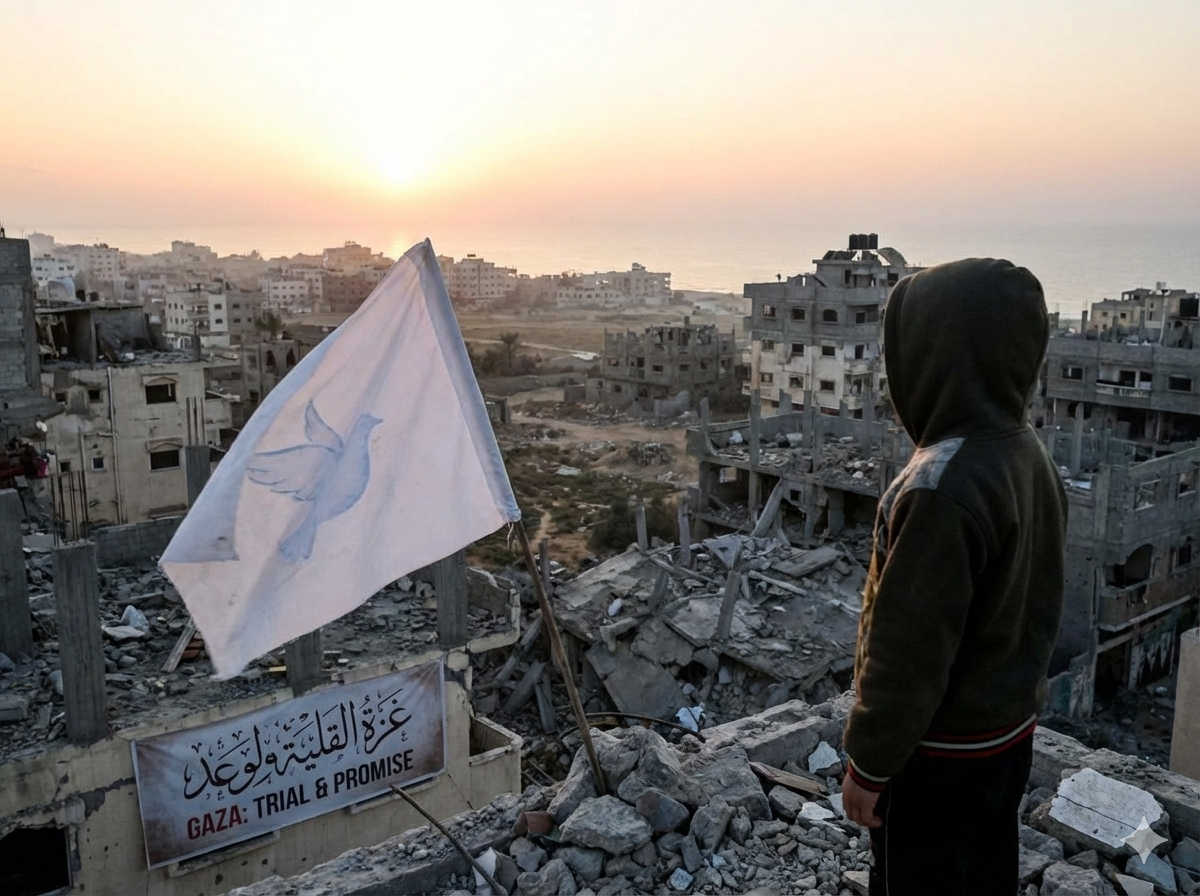
This article explores Gaza’s devastation as both a humanitarian tragedy...
This article examines how the UN Security Council’s veto power...
This article explores the concept of science diplomacy as a...
This article uncovers how the political ascent of Zohran Mamdani...
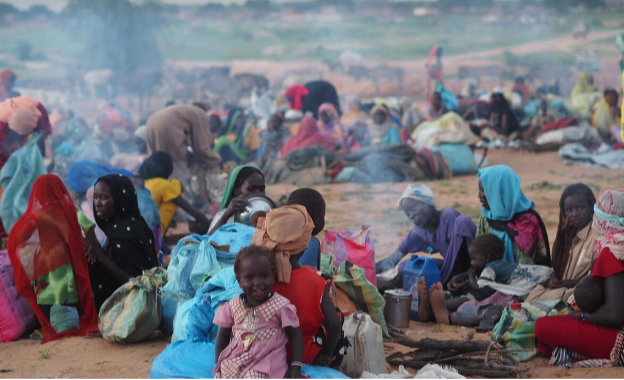
This article examines how the global silence over Sudan’s humanitarian...
This article examines the way artificial intelligence is transforming global...
This article reexamines the meaning of ASEAN neutrality in light...
This article analyzes the geopolitical and institutional significance of the...









Leave A Comment